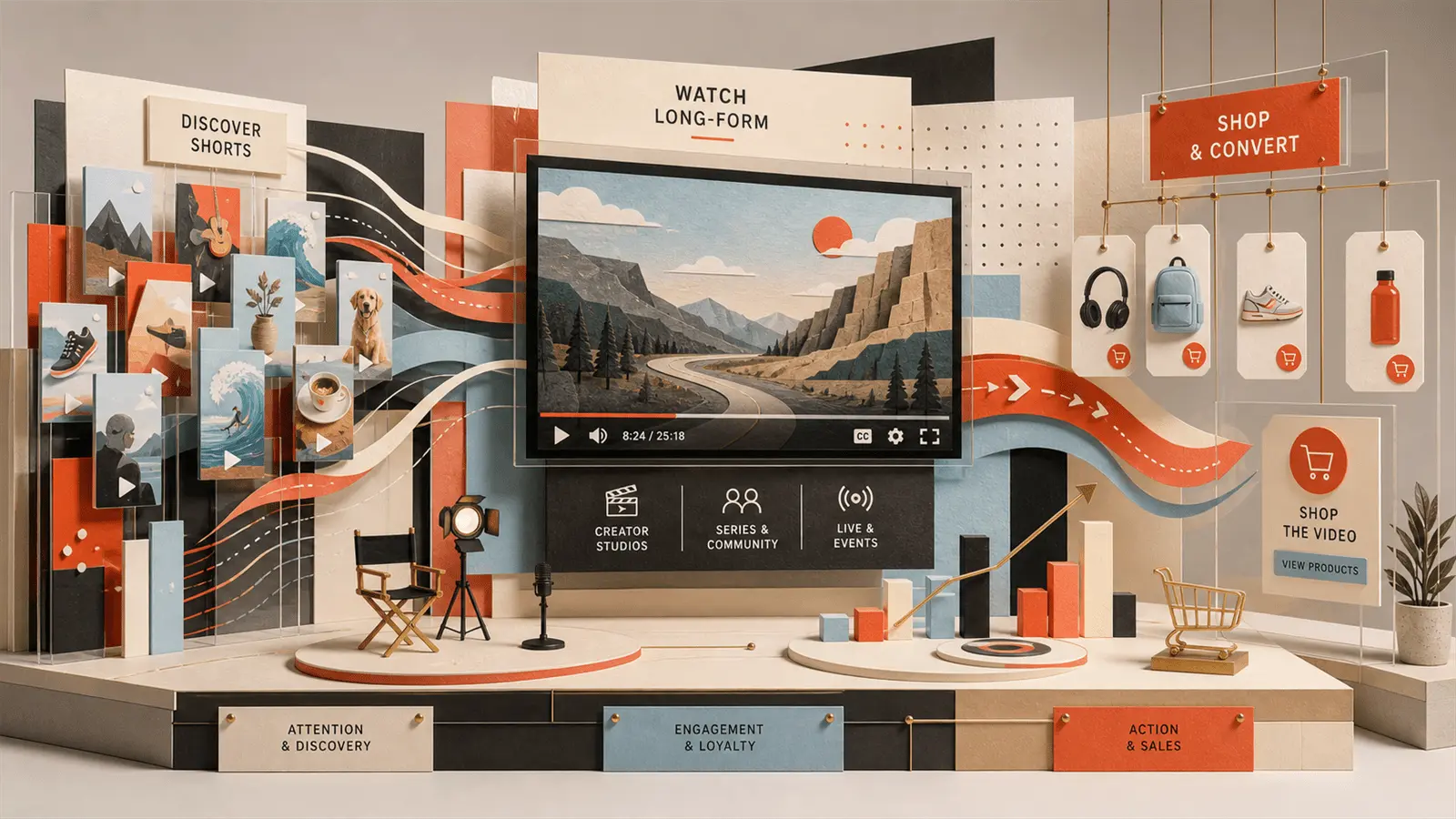
Many marketers still talk about YouTube as if it were one channel with many formats. The fresher reading is almost the opposite. The July 2 MMR article, built around Neal Mohan’s view of YouTube’s 2026 priorities, suggests that YouTube is now functioning like a layered operating model: Shorts for entry, creator-led programming for depth, connected TV for premium reach, and shopping tools for conversion.
That distinction matters because it changes how brands should plan budget, rights, creative workflows and measurement. If you still treat YouTube as a place to upload long videos and occasionally run pre-roll, you are already operating below the platform’s current commercial reality.
What changed
MMR highlights several signals at once. Creators are no longer behaving like casual content makers; many now act like scaled production studios. Shorts continue to operate as a mass discovery layer, reportedly reaching roughly 200 billion daily views. YouTube is also reinforcing the shift toward TV-like consumption and deeper commerce integration, including shopping flows tied more directly to video experiences.
The official YouTube blog made the broader strategic framing explicit earlier this year. Neal Mohan described creators as the media companies of the future and positioned YouTube as the place where those creator businesses, large-screen viewing, and AI-supported production will keep converging. The implication for marketers is straightforward: YouTube is no longer just a distribution endpoint. It is becoming a place where brand building, audience development and transaction design increasingly meet.
Why this matters for CMOs and brand teams
The first implication is budget architecture. If Shorts is the entry layer and long-form is the depth layer, then teams should stop judging all YouTube work by one KPI set. A six-second or fifteen-second vertical clip should not be asked to do the same job as a recurring creator-led series or a connected-TV placement. Each layer has a different role in the journey, and the budget model should reflect that.
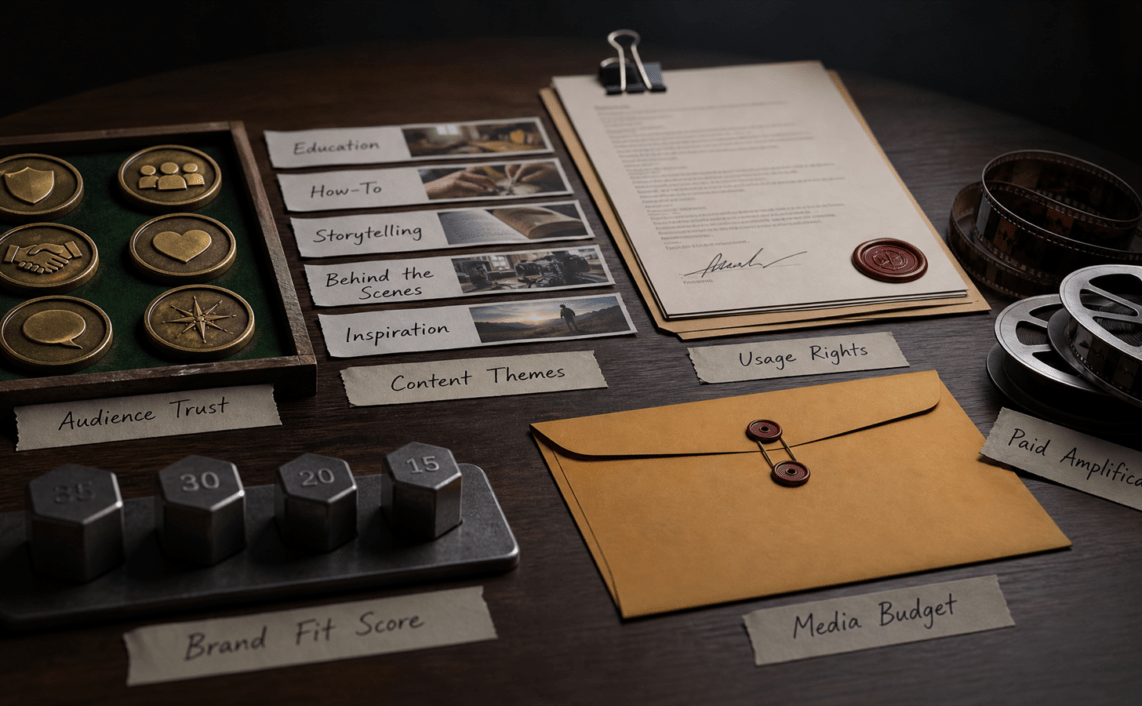
The second implication is rights and asset planning. As creator partnerships become more important, brands need to negotiate for repeatable use, not just one-off integrations. Content that works on YouTube can often be repurposed into paid social, owned channels, performance creative, retail media video and even commerce landing experiences. But that only works if rights, edit windows and brand-safety standards are agreed up front.
The third implication is organizational. The team structure behind YouTube can no longer sit awkwardly between brand and social. Shorts, long-form, creators, shopping and TV inventory pull in different directions unless someone owns the system. Without that ownership, brands default to fragmented tactics: a social team chasing views, a brand team sponsoring creators, an ecommerce team handling shopping tags, and a media team buying video separately.
What operators should do next
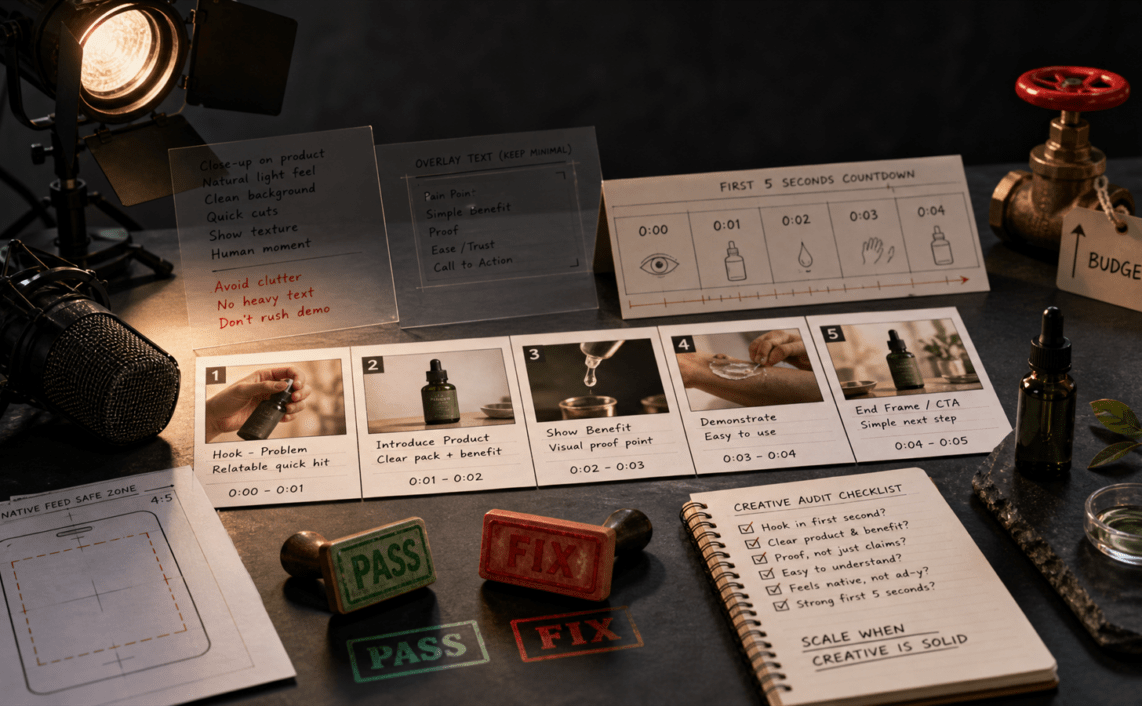
Start by mapping your YouTube activity to three jobs: discovery, depth and conversion. Discovery content should be fast, repeatable and optimized for strong opening frames and continuity across a series. Depth content should answer a bigger audience need: entertainment, expertise, product proof, or community belonging. Conversion content should reduce friction, whether through product tagging, creator proof, or retargeting logic tied to engaged viewers.
Then review creator strategy through a production lens, not only an influencer lens. Which creators can co-build a recurring format that your brand can live inside credibly? Which ones can help you generate assets that travel across paid and owned channels? Which ones should remain one-off awareness partners because their value is reach, not format ownership? Those are different commercial relationships and should not share the same briefing model.
Measurement also needs a reset. Views still matter, but they are not enough. Watch time, retention, returning viewers, assisted conversion, branded search lift and commerce actions need to be read together. A high-view Shorts program that sends no one into deeper content may be overvalued. A modest series that builds repeat viewing and drives stronger product consideration may be strategically better.
The bigger strategic shift
YouTube is increasingly behaving like a full-funnel video system that can move a user from curiosity to habit to purchase without leaving the broader environment. That does not mean every brand should build a mini media company tomorrow. It does mean the old split between brand video, creator work and commerce video is becoming harder to defend.
The brands that win on YouTube in the next phase will not be the ones that simply post more. They will be the ones that design a coherent operating model: what each format does, who owns it, how creator relationships are structured, what data proves value, and where video should connect to actual business outcomes. That is a much more demanding task than social content planning. But it is also a much more valuable one.
Source References
- MMR: CEO YouTube окреслив майбутнє відеомаркетингу: головні тренди 2026 року
- YouTube Official Blog: From the CEO: What’s coming to YouTube in 2026