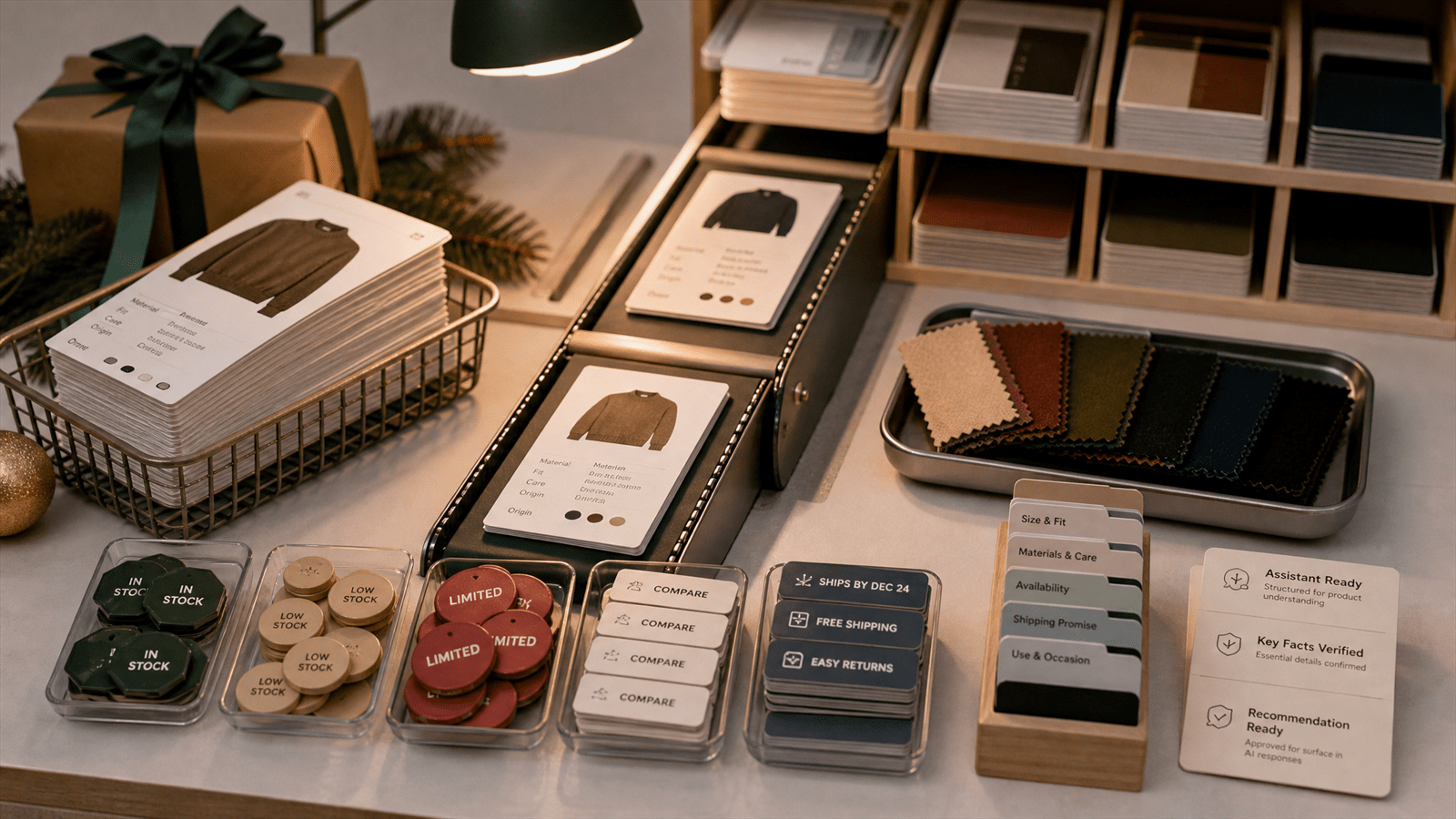
Microsoft Advertising’s August 21 AI-shopping playbook should be read as a budget warning, not only a platform announcement. The core claim is that AI assistants and agents now sit between retailers and many purchase decisions. They do not evaluate a product like a person browsing a campaign image. They compare structured facts: availability, specifications, price, delivery, reviews, return confidence and whether the product fits the task a shopper described.
That changes the owner of growth readiness. A paid media team can buy demand, but it cannot compensate for a thin catalog, missing attributes or confusing product promises. If an assistant cannot understand what you sell, when it is available and why it is the right choice, the brand may disappear before the shopper reaches the site.
What changed in AI shopping
Microsoft frames the shift around three jobs: get discovered, get chosen and understand what is working. The post points to Microsoft Merchant Center product feeds, AI-native ads, Copilot commerce experiences, Brand Agent concepts and Clarity visibility insights as parts of that operating environment. The specific products matter, but the larger point is broader than one platform: AI shopping compresses discovery and comparison into a shorter, machine-assisted path.
The blog cites strong retail signals, including rapid growth in AI-referred traffic and better conversion behavior for AI-referred visitors. Those numbers should not be copied into every forecast. They should push teams to ask a more practical question: is our product information good enough for an assistant to recommend us with confidence?
Why product data becomes a marketing asset
Most product feeds were built for advertising operations. They often contain the fields a campaign requires, not the full decision context a buyer needs. Agentic commerce raises the bar. A useful assistant has to answer comparison questions, not just show a product title and price. That means missing size details, weak category mapping, stale availability and vague descriptions become growth problems.
Product data also affects measurement. If AI discovery sends a smaller number of higher-intent visitors, a team that watches only last-click volume may underfund the channel. If it watches only assisted revenue, it may over-credit a new surface. The discipline is to connect the data layer, referral signals and post-click behavior before moving major budget.
A 90-day readiness checklist
- Audit the top revenue categories for missing attributes, weak taxonomy and stale availability.
- Rewrite product facts so a comparison engine can understand use case, material, dimensions, compatibility, delivery and return conditions.
- Separate brand storytelling from factual product evidence; both matter, but assistants need the evidence first.
- Map which fields feed ads, onsite search, organic pages, marketplace listings and AI-shopping surfaces.
- Create a weekly data-quality owner for holiday trading periods, not only a one-time feed export.
- Track AI-referred sessions, landing-page behavior, assisted revenue and customer-service questions together.
What to measure before shifting budget
The first reporting layer should answer whether AI-assisted traffic is real, whether it behaves differently and whether the catalog can scale. Look for referral quality, product-page depth, add-to-cart rate, checkout continuation, branded search lift and customer questions that reveal missing product information. Also watch where assistants misclassify the brand or omit important categories.
For a retailer, this is not a reason to pause paid media. It is a reason to stop treating feed hygiene as back-office maintenance. Product data, creative, landing pages and measurement have to be reviewed as one commerce system.
The CMO takeaway
AI shopping does not remove the need for brand. It changes where brand proof is tested. Before a shopper sees the campaign, an assistant may already have judged whether the product is understandable, relevant and trustworthy.
The practical move is to fund a product-data readiness sprint before the holiday plan locks. If the team cannot explain which catalog fields drive discovery, which product promises are machine-readable and how AI-referred demand will be measured, the budget is not ready for agentic commerce.