A fall in organic traffic is easy to see. The useful work is spotting the weakness before the graph drops. Search Engine Land’s September 3 article on SEO warning signs is a good trigger because many teams still review organic performance too late: total sessions, total clicks or a monthly board chart. By the time those numbers move, commercial visibility may have been eroding underneath for weeks.
The practical answer is not a bigger dashboard. It is a small early-warning diagnostic built around Search Console, ranking evidence and business context. Google says Search Console’s Performance report can group data by queries, pages, countries, devices, search appearance and dates, while clicks, impressions, CTR and position each describe a different part of search visibility. Those dimensions are enough to catch many problems early if the team knows what to compare.
Why total traffic is a late signal
Total organic traffic mixes too many things. A site can gain informational visits while losing bottom-funnel queries. A blog post can offset a decline on a product page. Mobile traffic can weaken while desktop holds steady. A country that does not matter commercially can hide a fall in the market that does.
That is why leadership should not ask only whether organic traffic is up or down. The better question is whether the right pages are still winning the right searches. Search Console aggregation can change depending on whether data is grouped by query, page or another dimension, so teams should treat the tool as a diagnostic system rather than a single scoreboard.
The early-warning dashboard
Start with a fixed set of commercial queries: product, service, pricing, comparison, category, local and problem-aware searches that lead to pipeline or revenue. Track them weekly, not daily. For each group, review impressions, clicks, CTR, average position and the landing pages Google is choosing. Then split by device and country where those views change the decision.
Add one business layer. Which pages matter to sales this quarter? Which categories have margin or inventory pressure? Which offers are active in paid media? Early SEO warnings are more useful when they tell the company what to protect, not merely what moved in a tool.
Five signs to investigate
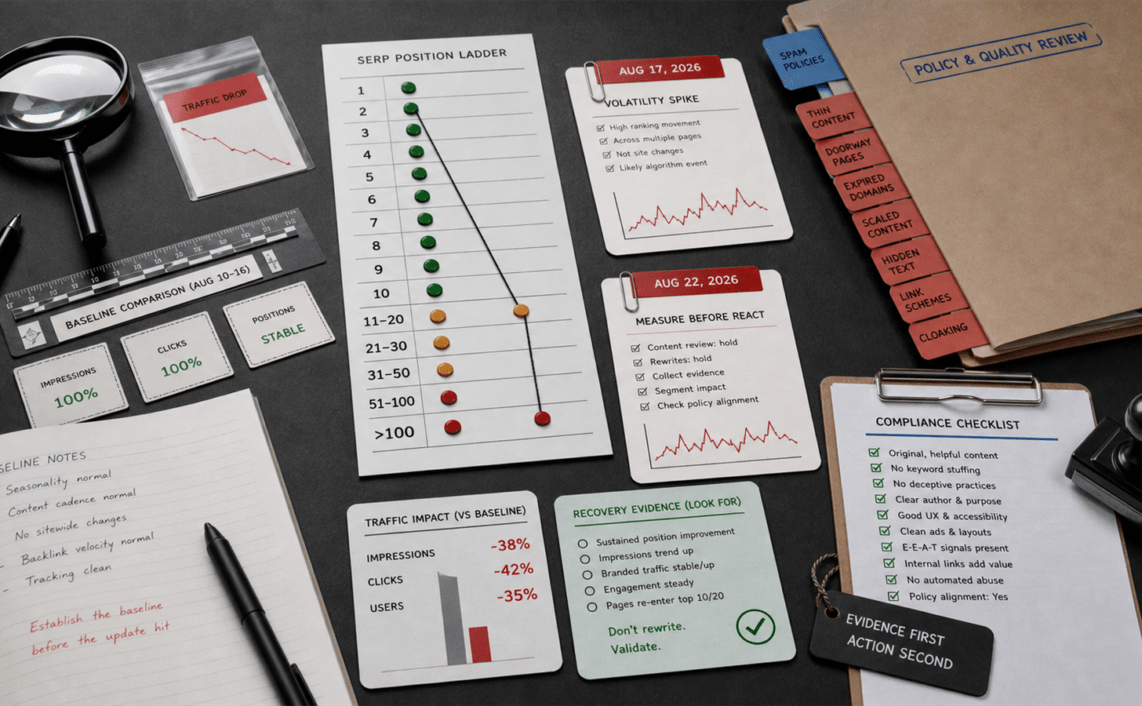
- Commercial rankings slip while total organic traffic is flat.
- Impressions rise but clicks and CTR do not follow, suggesting SERP layout, intent or snippet weakness.
- Google starts sending a query to a different page than the one the business wants to rank.
- A strong page loses visibility on mobile or in a priority country while the global average looks stable.
- Lead, order or revenue quality weakens before traffic volume declines.
None of these signs proves a single cause. They are prompts for investigation. Query movement can reflect SERP changes, competitor improvements, internal cannibalization, stale content, weaker internal links, technical issues, title and snippet mismatch, or a shift in search intent.
How to triage without overreacting
Use a simple severity model. High severity means a commercial query group, priority landing page and business metric all weaken together. Medium severity means search visibility is down but commercial outcomes have not moved yet. Low severity means volatility appears in low-value queries or isolated pages with no business impact.
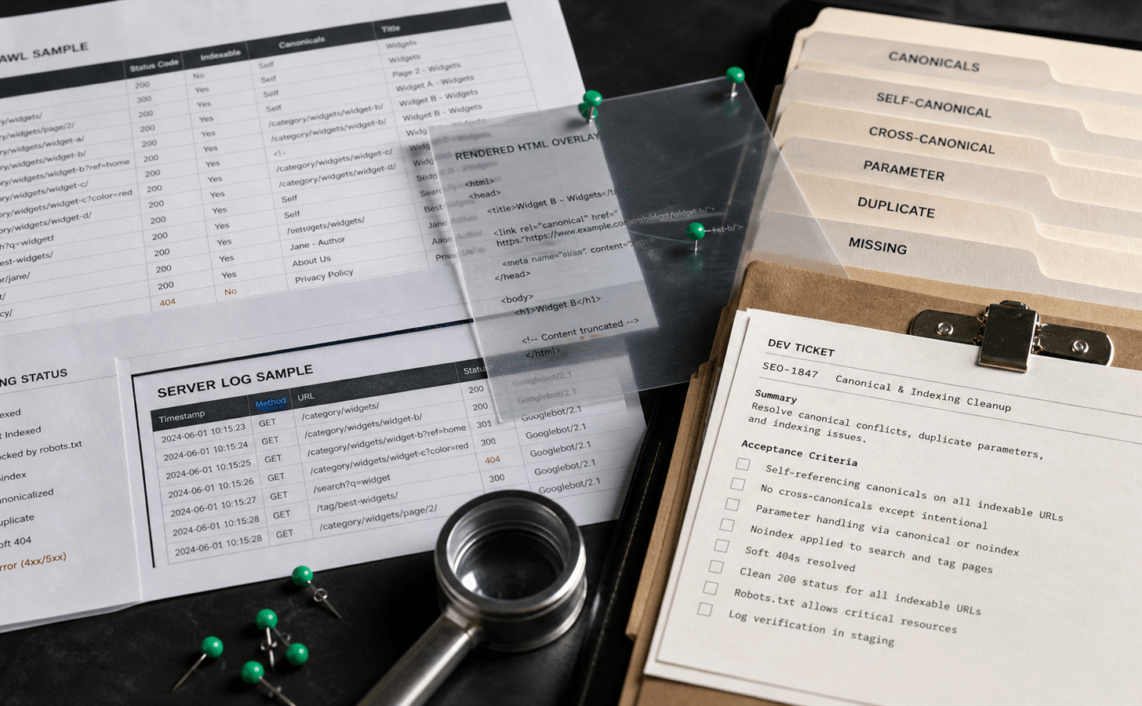
Then match the response to the evidence. If the wrong page is ranking, review internal links, canonical signals, duplicate intent and content overlap. If impressions rise but clicks stall, inspect titles, snippets, SERP features and whether the query now expects a different answer format. If a priority page slips across many queries, check content freshness, technical rendering, indexability and competitor changes. Avoid rewriting everything because one keyword moved.
What leadership should see
CMOs and owners do not need every query row. They need a short warning report: affected query group, business page, likely mechanism, revenue exposure, recommended action, owner and review date. That format turns SEO from a retrospective traffic explanation into an operating rhythm.
The main lesson is disciplined timing. Do not wait for a monthly traffic fall to start the conversation. If commercial queries weaken, CTR diverges, pages swap places or high-value markets soften, the team already has enough evidence to investigate. Early SEO diagnosis does not remove volatility, but it gives the business more time to protect the searches that actually matter.