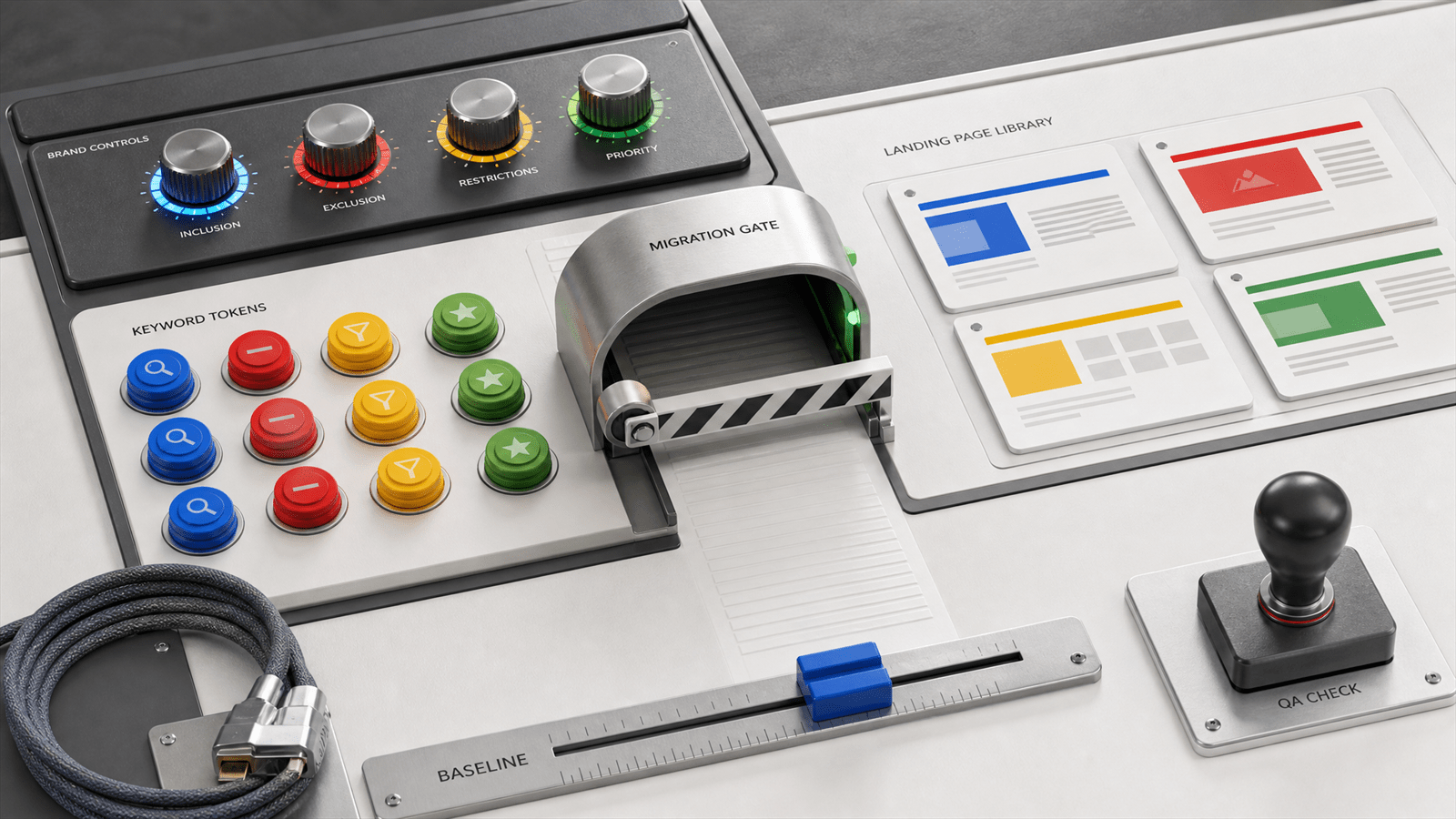
Google’s September AI Max migration is easy to underestimate because many advertisers will see it as a platform label change. That is the wrong frame. For paid-search teams, it is a control migration that can touch matching, generated text, landing-page routing, reporting baselines and API integrations.
Search Engine Land reported that from September 1 to 30, 2026, Google is automatically upgrading eligible Search campaigns that use campaign-level broad match or standalone automatically created assets to AI Max. Google Ads documentation describes AI Max for Search around features such as search term matching, text customization and final URL expansion. Dynamic Search Ads have a later migration path, so do not treat every legacy Search setup as already moved.
Who is in scope
The first task is a campaign inventory. Identify Search campaigns using campaign-level broad match and campaigns that depend on automatically created assets. Mark the current status of text customization, final URL expansion, brand controls, location intent settings, URL exclusions, negative keywords and conversion goals. If you manage scripts, feeds or reporting pipelines, check whether they depend on deprecated campaign structures.
Do this before judging performance. If a campaign’s matching logic, creative generation or destination logic changes, the next two weeks of data are not a clean continuation of the previous trend. They are a migration period.
The pre-migration checklist
Snapshot every affected campaign. Export settings, ads, assets, search terms, landing pages, conversion actions, audience signals and budget history. Keep screenshots only as backup; structured exports are easier to compare later. Then create a short control sheet with five columns: setting, current value, migration risk, owner and post-migration check.
Final URL expansion deserves its own review. If a campaign must send traffic to a specific funnel, define URL exclusions and confirm which pages are eligible. If the site has old landing pages, policy pages, low-margin categories or informational articles that should not receive paid traffic, exclude them before the system starts broadening destination choices.
Text customization also needs a brand and compliance pass. AI-generated headlines and descriptions can improve relevance, but they can also surface claims the legal team did not approve or send a different product promise than the landing page supports. Create examples of acceptable and unacceptable language before the migration becomes a reporting debate.
How to read the first 14 days
After migration, do not celebrate or panic on day one. Monitor search-term quality, landing-page mix, conversion lag, new-customer share, impression growth and margin. Separate extra volume from better volume. If clicks rise but revenue per click or lead quality falls, the campaign may need tighter controls rather than a bigger budget.
For agencies, the client-facing explanation should be written before the account changes. Tell the client which campaigns were in scope, which controls were checked, which metrics will be watched and what would trigger a rollback or constraint. That protects the relationship when the chart inevitably moves.
The budget decision
AI Max can be useful when a search account has strong conversion data, clean landing pages and enough budget to learn. It is riskier when the site has mixed intent, weak conversion hygiene or narrow compliance boundaries. The decision is not “AI or no AI.” It is whether the account has enough guardrails for automation to explore without spending against the wrong pages or promises.
The practical move is to treat September as a controlled change window. Preserve the baseline, document settings, review URL and creative controls, and judge ROAS only after the system has been checked against business reality.