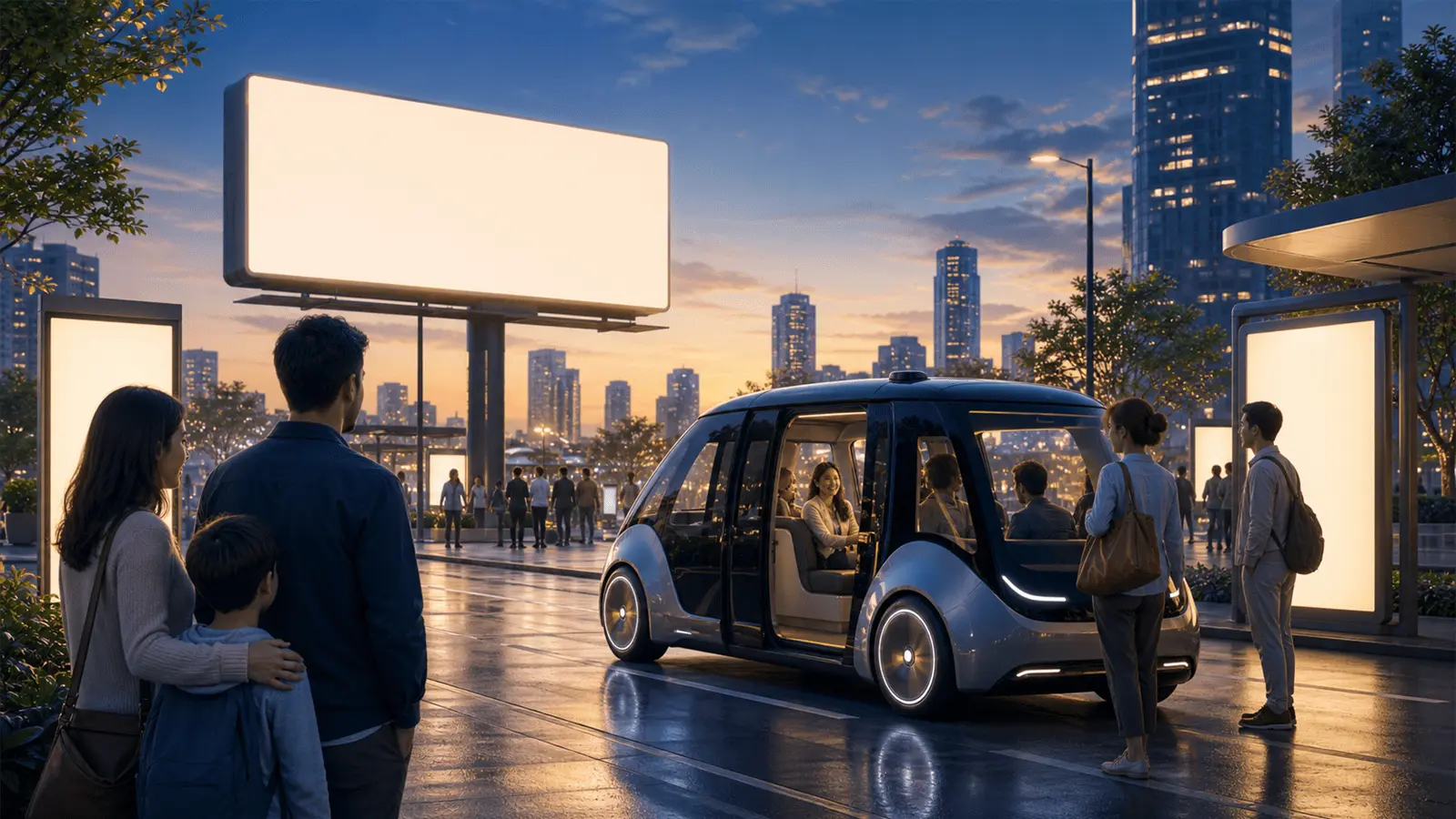
Waymo’s move into national advertising is a useful case study for any company selling a new behavior, not just a new product. According to The Wall Street Journal, the autonomous mobility company is preparing its first national campaign as robotaxis become more visible, competitors multiply and public scrutiny increases. The marketing challenge is not simply to explain how the technology works. It is to make people feel that the service belongs in ordinary life.
The real marketing problem is adoption
This is a classic trust problem. When a category is unfamiliar, audiences do not evaluate it like a normal feature upgrade. They ask more basic questions: Is it safe? Is it for people like me? What happens when something goes wrong? Can I picture myself using it? In that context, a purely technical message can even backfire. Sensors, models and miles driven may support credibility, but they rarely create emotional permission on their own.
The reported direction of the campaign is therefore telling: focus on riders, safety and the human side of the service rather than only on autonomous driving as an engineering achievement. For marketers, that is the right strategic instinct. People adopt difficult innovations when the story moves from novelty to usefulness, then from usefulness to normality. The job of advertising is to speed up that transition without pretending the concerns do not exist.
Waymo’s timing also matters. The company is building brand recognition beyond the cities where many people can currently use the service. That may look inefficient if judged only by immediate conversion, but it makes sense for a regulated, high-consideration category. Public acceptance, policymaker familiarity, media framing and future market entry are connected. A brand that waits until launch day to explain itself may already be behind the conversation.
Lessons for high-trust categories
There is a second layer: customer relationship. Around the same time, The Verge reported on Waymo Premier, a paid membership tier with benefits such as priority pickups and ride rewards in selected markets. Advertising builds public legitimacy; membership builds habitual use among frequent riders. Together, these are two sides of commercialization. One reduces uncertainty at the market level, the other increases loyalty at the user level.
For other companies working with AI, automation, fintech, healthtech or any category that asks people to change behavior, the lesson is clear. Do not overestimate rational explanation. Technical proof is necessary, but trust is built through repeated cues: who uses the product, what moments it solves, how the brand responds to doubt, and whether the experience feels understandable before the first trial.
The strongest campaigns in emerging categories do three things at once. They show the benefit in human terms. They acknowledge safety or reliability without becoming defensive. And they make the future feel less abstract. If Waymo can do that nationally, the campaign will not just promote rides. It will help define what autonomous mobility is supposed to feel like.
Sources:
The Wall Street Journal: Waymo readies first national ads
The Verge: Waymo introduces a premium membership tier