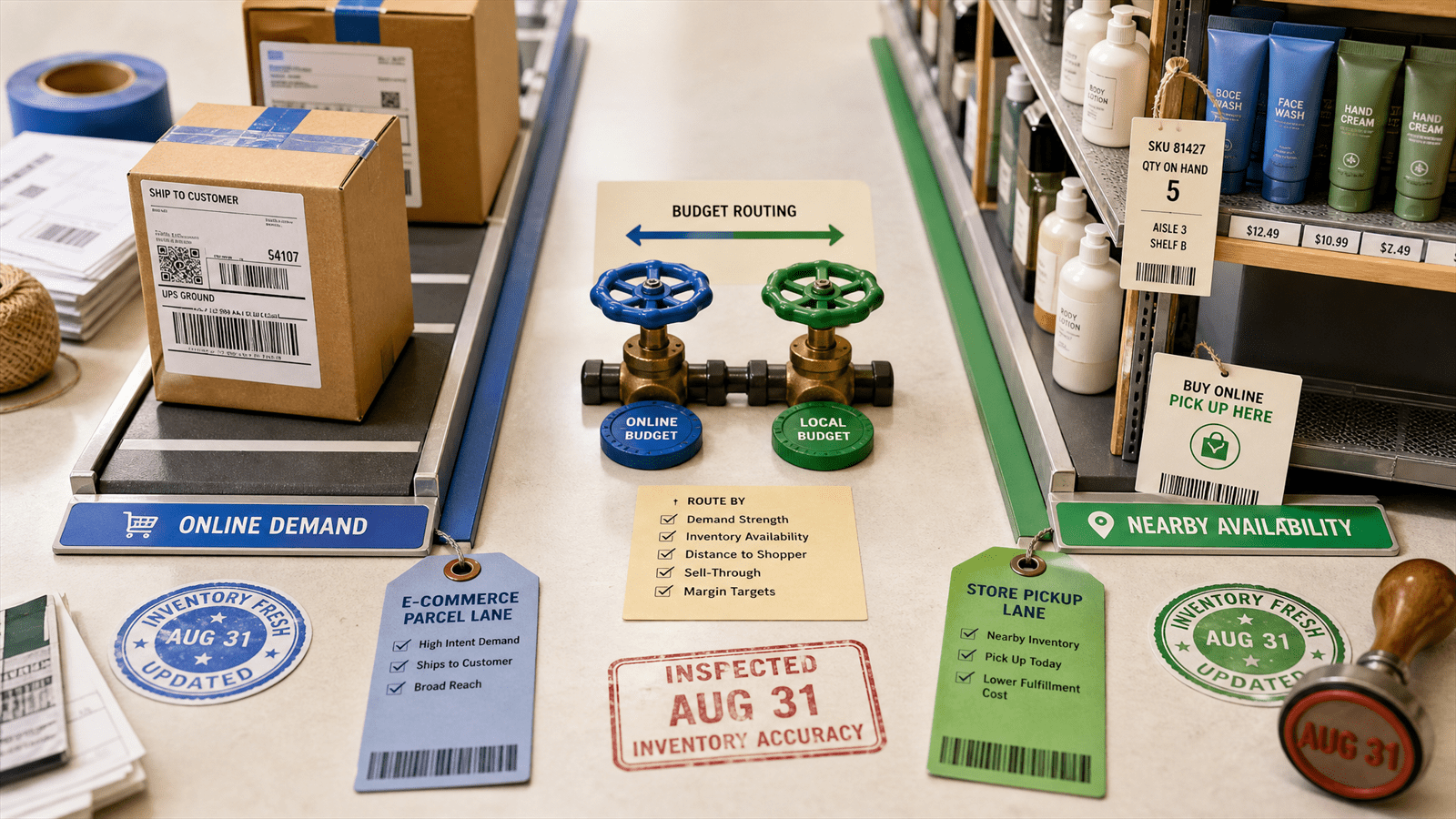
August 31 is not just another Google Ads settings date for retailers. Google’s local inventory ads change forces a practical question: should paid Shopping demand be allowed to flow toward nearby store availability, or should the campaign stay focused on online fulfilment until the store data is reliable?
The answer is not ideological. Local inventory ads can help when stores carry the product, prices are current and the business can measure calls, directions, pickup or store-assisted sales. They can also waste budget when the feed is stale, pickup promises are unclear or the ecommerce team still reports every click as if it were an online session.
What changes on August 31
Google’s developer notice sets August 31, 2026 as the effective date for a change in local inventory ads serving behaviour. The practical implication for marketing teams is that Shopping governance has to include store inventory, not only product feed health and bidding targets.
Local inventory ads are designed to show shoppers products available near them. That makes them useful for retailers with stores, local pickup, same-day availability or categories where customers want to inspect before buying. It also makes them dangerous for accounts that have local feeds connected but no operating owner for store data quality.
Why this is a budget-control issue
Paid search managers usually look for wasted spend in queries, products, audiences and bidding. Local inventory adds another routing layer. The campaign can create value in a store journey, but the media report may not show the full path unless store outcomes are already part of the measurement plan.
A retailer should not judge the change only by CPC or ROAS in the first days. The better question is whether the campaign is sending demand to the right fulfilment route. If online stock is strong but stores are patchy, the local lane may hurt conversion quality. If stores are the fastest route for high-intent shoppers, the local lane may be exactly where budget should go.
The local inventory ads checklist
Start with exposure. List every Shopping or Performance Max setup that uses Merchant Center data and confirm whether local inventory feeds, pickup annotations or store goals are active. Do not assume the ecommerce team and store operations team have the same view of product availability.
Then check inventory freshness. The campaign promise is only as good as the data behind size, color, price, pickup status and store availability. Where data is incomplete, exclude the risky categories or hold them out until the operational owner can fix the feed.
Next, separate goals. Online-only campaigns should have a clear reason to remain online-only. Store-assisted campaigns should have their own first-week watchlist: directions, calls, store visits where available, pickup events, local product page behaviour and customer-service issues.
Finally, prepare a pause rule. If local clicks rise while stock complaints, cancellation rates or pickup failures rise too, the problem is not bidding. It is a broken promise in the store data layer.
What to measure in the first week
Use a short diagnostic table: campaign, product group, local impression share, store-interaction metrics, online conversion rate, pickup or call outcomes, fulfilment exceptions and margin risk. The table should be reviewed by paid media, ecommerce and store operations together.
This avoids the common mistake of letting one team call the test efficient while another team absorbs the operational cost. Local inventory ads live between media and fulfilment, so the review has to do the same.
The decision for retail marketers
The deadline should trigger a simple decision. Let local inventory ads run where store data is fresh, the customer promise is clear and store-assisted outcomes are measurable. Limit or restructure them where the account cannot yet prove availability, pickup quality or commercial value.
Retail paid media is no longer only about buying the click. It is about sending the click to a fulfilment route the business can actually keep.