A retailer can pay to bring a shopper to the shelf and still lose the purchase because a simple question goes unanswered. The WHSmith–x-hoppers announcement on 27 October is useful for marketing leaders because it puts that final service step inside the conversion discussion.
The company announcement, published by Retail Times, describes a planned rollout to more than 300 UK stores after a pilot. It reports almost 1,000 customer help requests through QR codes and sales growth of up to 22% in selected categories compared with before installation. These are reported case observations, not proof of a chain-wide or independently established causal effect.
The mechanism is assistance at the point of doubt
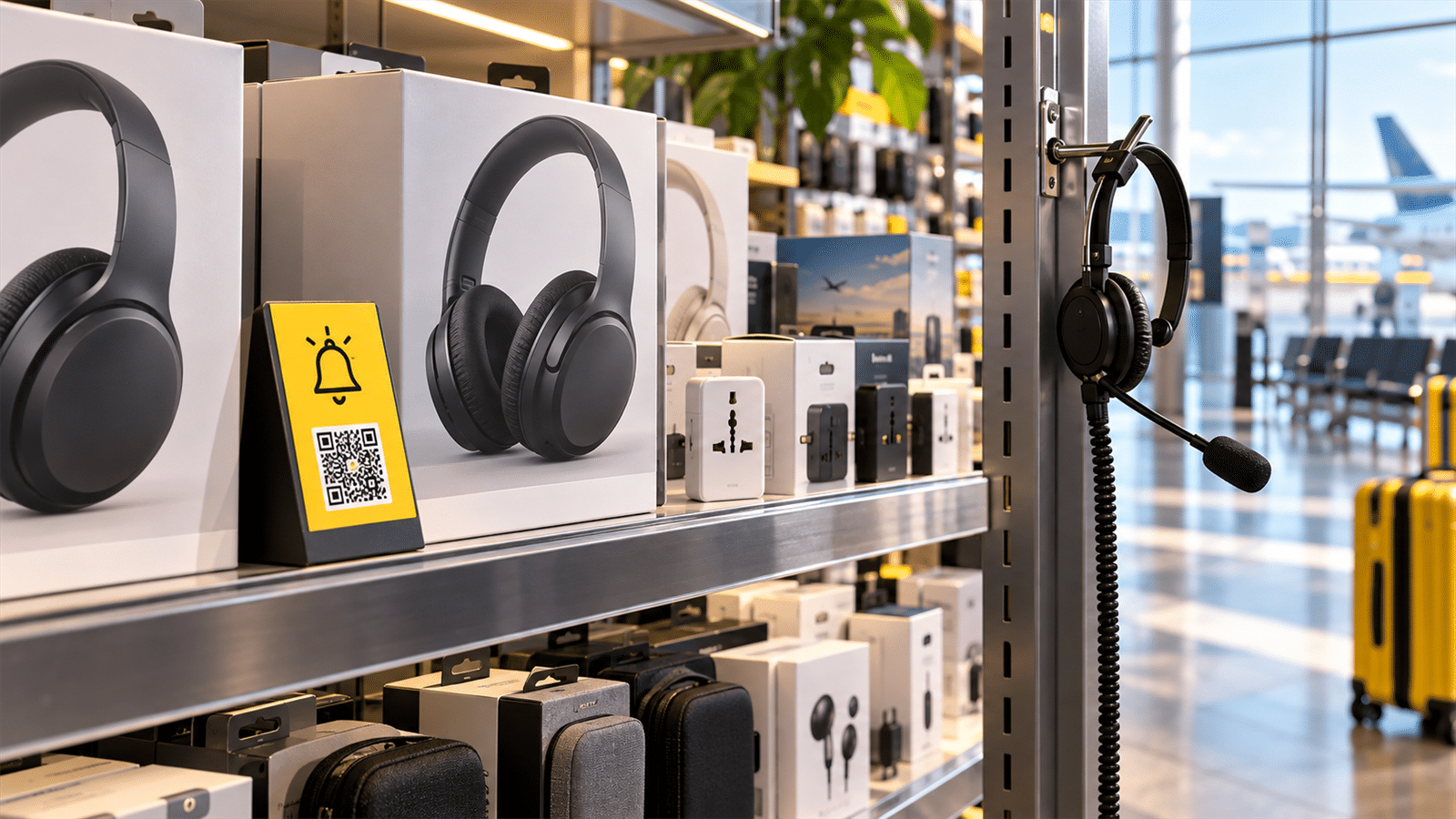
The supplier describes QR-based call points that notify staff. The marketing mechanism is straightforward: a customer considering a product can request an answer without leaving the shelf to find someone. For a travel retailer, the relevant question is whether help arrives while the purchase is still possible.
This is different from another promotional message. A shelf advertisement tries to create preference; a help point tries to resolve uncertainty. Audit the questions customers cannot answer from packaging or signage before adding more promotional inventory. Availability, product suitability or a missing explanation may require different remedies.
Instrument the whole request-to-outcome path
Our proposed measurement chain has four events: a customer requests help, a colleague acknowledges it, the issue is resolved and an outcome is recorded where appropriate. Measure response time and unresolved requests, not just scans. A request is evidence of a service need; it is not a sale.
Keep customer requests separate from equipment alerts, delivery notifications and other operational messages. Counting every notification as shopper engagement inflates the apparent opportunity. Where a purchase cannot be linked reliably and appropriately, use category-level comparisons and state the limitation rather than inventing a precise assisted-sales figure.
Test the sales claim against a credible comparison
“Up to 22%” describes a reported result in selected categories, not an expected return for every shop. Before using it in a business case, ask about the baseline, category selection, timing and comparison stores. The announcement does not provide enough detail to separate the service intervention from all other influences on sales.
For your own pilot, compare similar stores or introduce the service in stages. Track stock availability, promotions, visitor patterns and staffing alongside conversion. A faster answer cannot sell an unavailable item, while a promotion may raise sales without changing service quality. Include busy and quieter periods to understand when the process helps and when it adds unnecessary interruption.
Scale a service process, not a headline percentage
Agree who owns each request, when to escalate and how to close a failed interaction. Repeated unresolved questions may indicate a packaging, merchandising or training problem worth fixing at source. Marketing and store operations should review those patterns together: the most useful outcome may be removing the need to ask.
Evaluate incremental contribution after hardware, software, staff time and training costs. Scale where evidence shows that resolved questions improve the customer’s buying path at an acceptable cost. WHSmith’s announced expansion makes the case worth studying, but the transferable lesson is a measurable assistance process—not a promise that installing technology will reproduce the largest reported uplift.
Sources
- Company announcement in Retail Times: WHSmith rolls out x-hoppers
- x-hoppers: retail communication and smart call points