A category label tells a retailer where products belong. It does not necessarily explain why someone buys them. Bonduelle’s latest category perspective offers a useful starting point for brand and retail teams: before applying one message to all canned vegetables, test whether shoppers are solving different meal problems.
One category can contain different missions
In a November 13 RetailDetail interview, Bonduelle’s category specialist distinguishes traditional staples from corn and legumes linked to different cooking occasions. That is a company perspective, not independent proof of a universal shopper shift. Its useful strategic implication is to examine the purchase mission rather than infer it from the shelf classification.
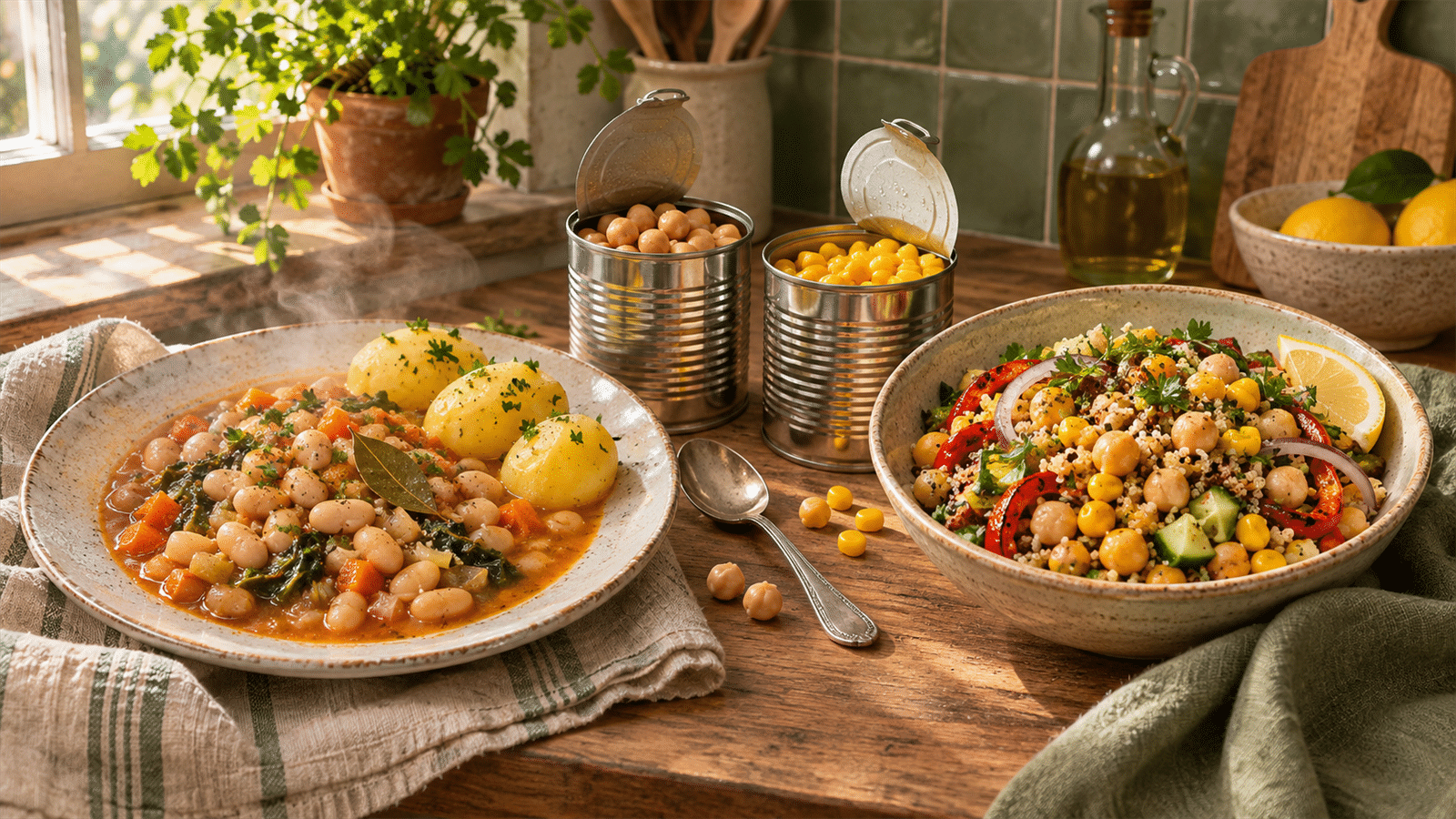
A familiar family dish and a quick grain bowl may involve overlapping ingredients but different decisions. For one mission, recognition and confidence in the expected result may matter; for another, the shopper may need an idea for using an ingredient. These are hypotheses for investigation, not findings established for every customer by the interview.
The marketing task is to identify the obstacle before choosing a creative treatment. A recipe does little for someone who already knows what to cook but cannot locate the right format. A clearer category sign does little for someone who finds the product but has no use for it tonight.
Write two observable shopper hypotheses
Start with a narrow mission statement: what meal is being assembled, what uncertainty might prevent purchase and what evidence would resolve it? Describe behavior that research or a retail test could observe. Avoid demographic shorthand such as assuming that every younger shopper wants the same cuisine.
For a hypothetical traditional-meal mission, test whether clearer product recognition improves selection without changing the price. For a hypothetical meal-inspiration mission, test a simple serving suggestion with ingredients that are actually available. Keep the promise practical: preparation steps and an identifiable finished dish are easier to evaluate than a broad lifestyle claim.
These are proposed experiments, not a description of Bonduelle’s execution. A retailer should first check whether the two missions exist in its own context. Brief shopper conversations, search terms or observed confusion can help formulate the question; they should not be presented as population-wide demand estimates.
Measure the category, not only the promoted item
A promoted product can gain sales by taking them from another product nearby. To investigate a category-growth claim, compare the relevant category outcome as well as the featured item, and record price, availability and promotional differences. Otherwise, a creative test may actually be a stock or discount test.
Where transaction data and permissions allow, examine whether the suggested meal ingredients are bought together. Treat this as evidence of basket behavior, not proof that the recipe caused the purchase. A useful test plan names the comparison group, the period, the decision threshold and the conditions that would invalidate the comparison.
Protect the commercial question from easy engagement metrics. A recipe view can indicate interest, but the retailer still needs to know whether the intervention helps selection, supports a relevant purchase or merely moves attention. Do not call it incremental category growth without a design capable of supporting that inference.
Turn the result into a merchandising decision
If shoppers struggle with recognition, improve naming and navigation before funding more inspiration. If they recognize products but lack an occasion, test useful meal content close to the choice. If neither hypothesis survives, revise the mission rather than declare that the entire category needs a brand refresh.
Preserve ordinary category access for shoppers with another goal. Meal-led communication should help a task without making a basic replenishment purchase harder. Use the test outcome to decide where a message belongs and which products genuinely support it, not simply how widely to repeat the same creative.
The case provides a way to frame a test, not a quantified sales benchmark. No uplift or causal planogram result is established here. The practical lesson is to treat a category as a set of purchase jobs, then earn a broader rollout through evidence from the retailer’s own shoppers and economics.