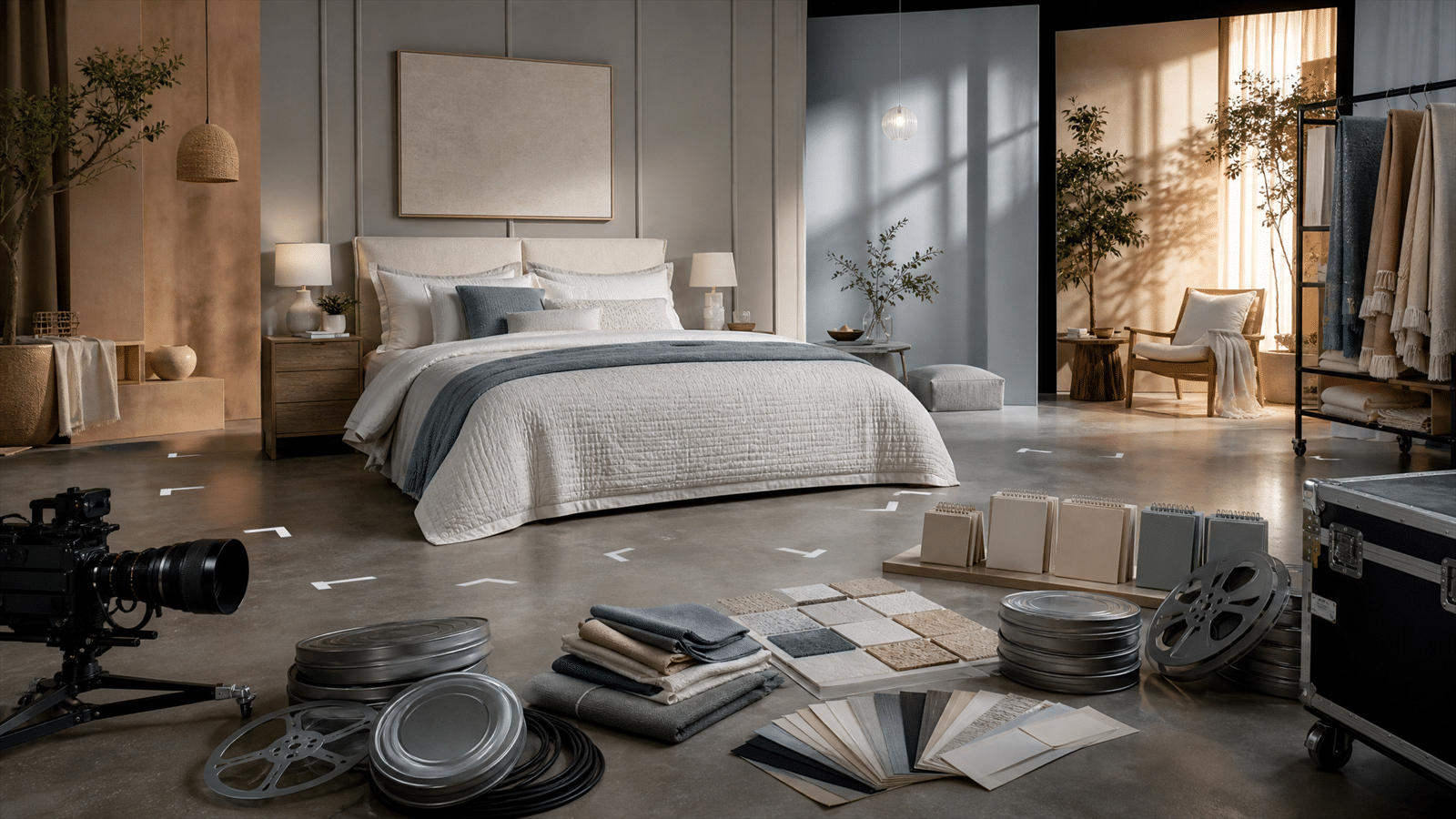
Brooklinen’s “Best. Sheets. Ever” campaign is easy to read as another celebrity-led DTC push. The more useful lesson is operational. Marketing Dive reported on September 25 that the work is Brooklinen’s first celebrity-led effort and its largest omnichannel campaign to date. After speaking with agencies, the brand chose to build the campaign in-house, using a cast across comedy, music and sports and turning the idea into multiple cuts for linear TV, connected TV, YouTube and Meta.
That does not mean every brand should bring a large campaign inside. It means in-house creative can work when the brand already has a strong platform, a product truth, a clear media calendar and enough modular thinking to create more than one hero film.
The real operating model
The campaign builds from a simple product argument: the bed is not just a place for sleep, but a place where life happens. Marketing Dive notes that the new work builds on Brooklinen’s earlier “Best in Bed” platform while moving closer to product proof. Each celebrity vignette can stand alone, but the system still points back to the same product promise.
That is the first condition for in-house work: the team must know the brand territory well enough to make fast creative choices without reinventing the strategy. If the platform is vague, an internal team can become a production desk for disconnected assets. If the platform is sharp, the internal team can translate it into many executions quickly.
Why modular assets matter
The second condition is modularity. Brooklinen’s campaign includes a hero spot, individual 15- and 30-second cuts and behind-the-scenes material. It is also timed around cultural moments such as the season premiere of “SNL” and the start of the NBA season. That gives media planning something to work with: different talent, different formats and different moments, all tied to one message.
For marketing leaders, the lesson is to plan cutdowns before production, not after. The best internal creative systems know which scenes will feed awareness, which will support retargeting, which can live socially and which will carry the product proof. Without that plan, in-house production often saves agency fees but wastes media opportunities.
A checklist before moving creative in-house
Before choosing the in-house route, ask four questions. Does the team own a brand platform specific enough to brief against? Does the product claim have visible proof, not just tone? Can the team cast or partner with people who bring audience relevance without hijacking the message? Can the production plan generate a family of assets for the whole funnel?
If the answer is no, an external agency may still be the better partner. If the answer is yes, the internal team can be closer to product knowledge, faster with approvals and more disciplined about reusing the core idea across channels.
The takeaway
Brooklinen’s case is not a universal argument for in-house creative. It is a reminder that campaign ownership is an operating decision. The team that owns the idea must also own the asset system, channel fit, calendar and measurement plan. Celebrity attention can open the door, but the operating model decides whether the campaign has enough pieces to keep working after the launch week.