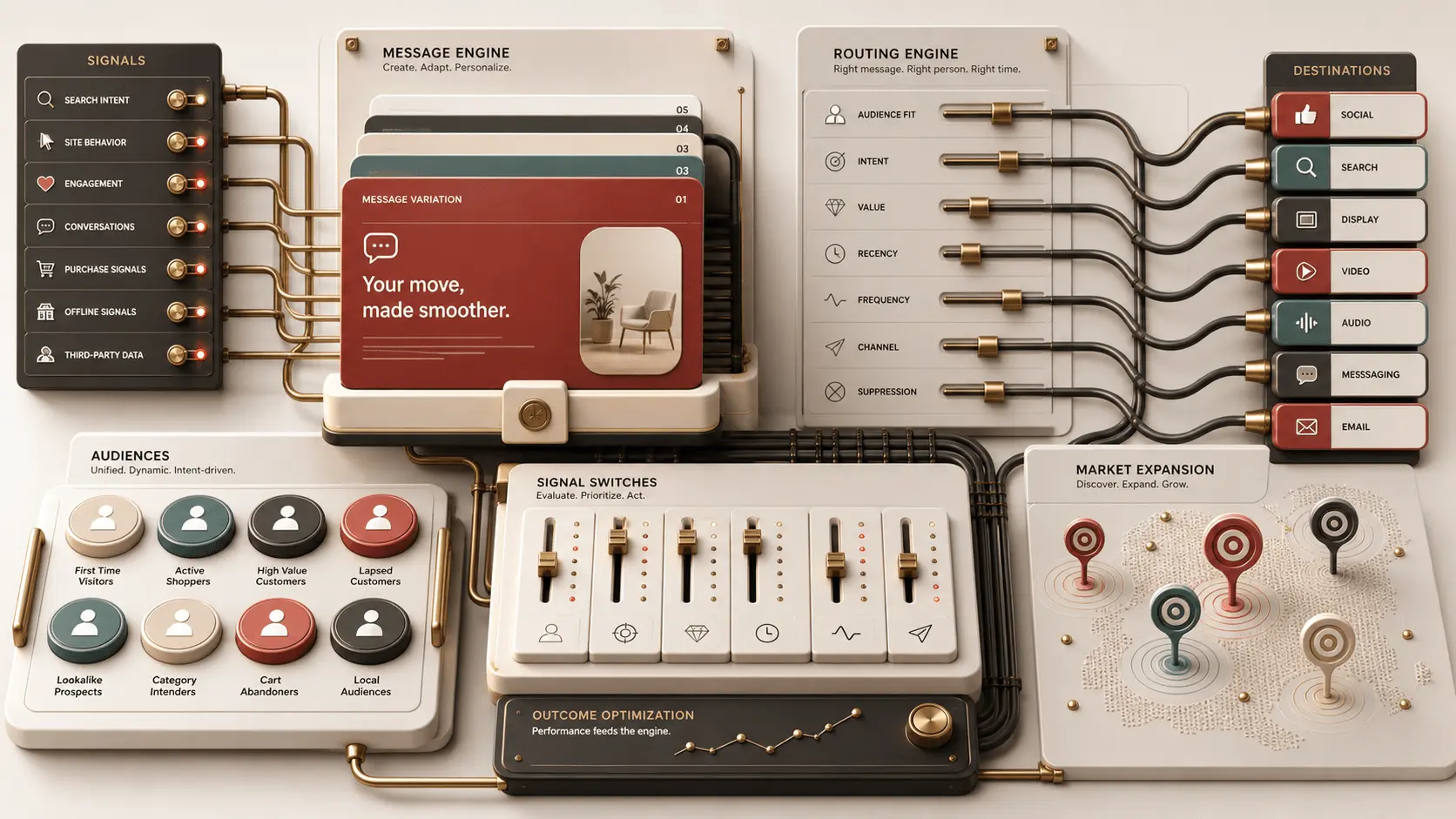
ChatGPT Ads looked easy to dismiss when the story was mostly about whether a conversational interface might one day support brand messages. The July 9 update makes that reading weaker. Search Engine Land reported that OpenAI has added an overview tab, suggested ad drafts, custom audiences and refreshed ad formats, while also expanding ChatGPT Ads into Japan and South Korea. That combination matters because it signals a shift from novelty inventory toward something paid-media teams can actually operate.
The most important change is not cosmetic. It is structural. A new placement becomes a real channel when marketers can monitor account health, manage audiences, shape creative workflow and adapt campaigns across markets without treating every launch like a special project. That is what these updates start to provide. The headline is not just “more features.” The headline is that conversational advertising is being packaged into a media system with clearer inputs, clearer controls and clearer accountability.
Why this update changes how marketers should read ChatGPT Ads
OpenAI’s early ad test was always going to rise or fall on trust. The company said in February that ads would support broader access to ChatGPT while preserving answer independence and keeping advertiser access away from private conversations. That principle still matters, but trust alone does not make a channel operational. Media teams also need workflow.
The July update adds that workflow layer. Custom audiences let advertisers include or suppress user lists of at least 25,000 people and apply bid multipliers at the ad-group level. The overview tab offers a more standard command surface for account health and recommended tasks. Suggested ad drafts use existing website metadata to prefill an image, title and description for review. OpenAI is not claiming full creative automation here; the point is faster setup with human review still in the loop.
That distinction is useful. It means ChatGPT Ads are not becoming magical. They are becoming manageable. For experienced marketers, that is a bigger signal than another promise about AI-generated scale. Channels become serious when they reduce setup friction without making governance impossible.
The real operational shift is audience control plus workflow scaffolding
Audience controls are what move a platform closer to the language of real media buying. Once teams can suppress existing customers, segment lists and adjust bids around known cohorts, they can start treating the channel as part of a broader portfolio rather than an isolated experiment. It becomes easier to ask the hard questions: where does this fit in the funnel, which customer states matter, and what should the platform do that search, social or retail media cannot do as well?
Suggested ad drafts matter for a different reason. They push website structure and metadata closer to the center of media operations. If your site descriptions, images and page hierarchy are messy, prefilling becomes noise. If they are clean, it becomes leverage. That is an important brandformance lesson. The boundary between owned content and paid distribution keeps shrinking. Metadata is no longer just an SEO concern. It is increasingly part of campaign assembly.
The Japan and South Korea launch matters in the same way. Geographic expansion is not just a sales note. It tells regional teams that OpenAI is building for international advertiser workflows, not only a U.S. pilot narrative. For brands operating across Asia-Pacific or through global holding-company structures, that shifts internal interest from curiosity to planning.
What paid-media teams should build before the channel gets crowded
Marketers should resist the urge to frame every new ad surface as a first-mover land grab. The better response is operational readiness. Start with audience logic. Decide which segments you would meaningfully suppress, which you would pay more to reach, and where conversational context could outperform classic intent or social interruption. If those answers are vague, the platform will not fix the strategy for you.
Then look at landing-page hygiene. Suggested drafts are only as strong as the inputs they inherit. Product pages, category pages and service pages should carry clean titles, strong descriptions and imagery that can survive repurposing. Otherwise, AI-assisted setup just speeds up weak creative.
Finally, define review rules early. Because suggested drafts can accelerate throughput, they can also accelerate mediocre output. Brands need someone accountable for message fit, claims, exclusions and regional nuance before the channel scales. The practical risk is not that AI will replace judgment. It is that teams will act as if faster assembly removes the need for judgment.
The broader takeaway is simple. ChatGPT Ads are starting to resemble a channel that can be planned, governed and optimized, not merely watched. That does not prove the economics yet. But it does change the strategic question. The question is no longer whether conversational advertising is real enough to monitor. The question is whether your media operation is ready for a channel where audience logic, website structure and assistant-native context meet in the same workflow.
Source References
- Search Engine Land: ChatGPT Ads new overview tab, suggested ad drafts, new ad formats and more
- OpenAI Help Center: Ads in ChatGPT – The Basics
- OpenAI: Testing ads in ChatGPT