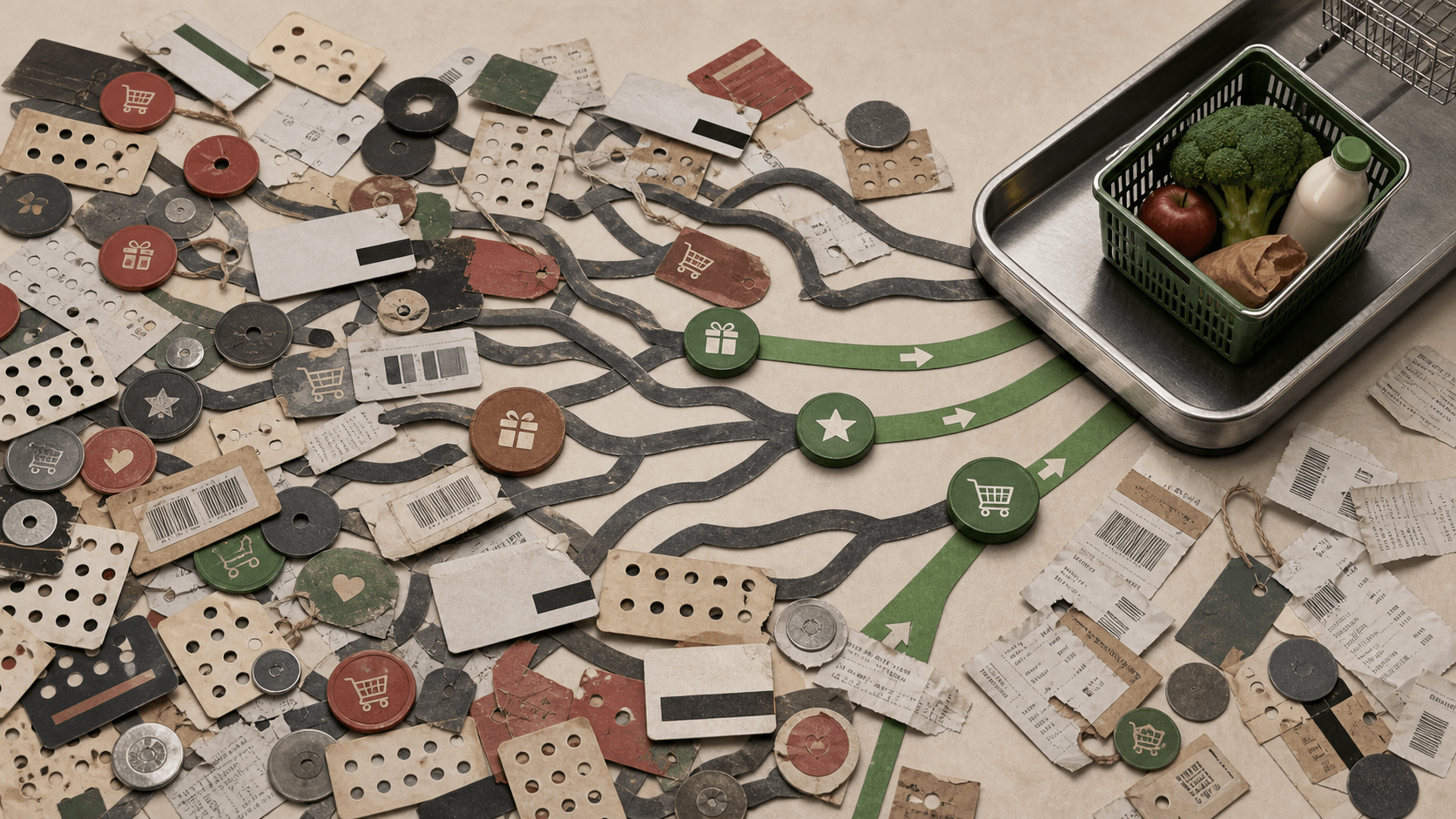
Loyalty dashboards often make retail teams feel safer than they should. Enrollment rises, app downloads look healthy, points are redeemed, and the business tells itself the program is doing its job. The July 15 Marketing Dive coverage of new Upside data is a useful correction. Shoppers still say rewards matter, but regular usage is much lower, and the bigger Upside report argues that many loyalty programs have reached a plateau where membership no longer proves real influence on behavior.
That is a serious commercial distinction. A shopper can value rewards, join several programs in the same category, and still give no single retailer a stronger share of wallet. Once that happens, loyalty stops functioning like a clean moat and starts behaving like a crowded layer of competing incentives. Brands that keep measuring success mainly through enrollment are often reporting participation while missing persuasion.
Why enrollment stopped being a convincing metric
Upside’s data suggests the market is saturated enough that many consumers belong to multiple competing programs in the same category. That changes the meaning of a signup. Membership can now signal low-friction availability rather than meaningful preference. The same report argues that the most responsive shoppers are often “preference-first” customers: they like certain brands, but they remain price-sensitive and willing to move when value is clearer elsewhere.
For marketers, the uncomfortable implication is that a loyalty program may be visible without being decisive. It may support retention in the abstract while failing to alter visit frequency, basket behavior, or recommendation strength in the way the business assumes.
A better framework for measuring loyalty impact
Instead of asking how many members the program has, ask what changed after the member joined. Did the customer visit more often? Did the brand capture a bigger share of category spend? Did the program influence channel choice, cross-category movement, or repeat purchase timing? These are harder metrics, but they are closer to the business question leaders actually care about.
- Separate membership volume from repeat behavioral change.
- Measure whether the program affects frequency, not just signups.
- Track which customer segments are still persuadable versus already committed.
- Review whether incentives change margin quality or only subsidize existing demand.
- Test whether loyalty mechanics work better when paired with marketplace-style value triggers or personalization.
This shifts loyalty from a CRM vanity metric into a commercial operating tool.
What retailers should do next
The strategic move is not to abandon loyalty. It is to stop confusing broad availability with meaningful leverage. If the category is saturated, the program has to do more than reward people who were already going to buy. It needs to redirect the next trip, improve the perceived value exchange, or create a clearer reason to choose one retailer over another at decision time.
That usually means redesigning the program around influence, not applause. The brands that escape the plateau will be the ones that can show behavioral lift among still-movable shoppers instead of reporting a growing pile of passive members.
Sources
- Marketing Dive: Consumers say rewards matter, but many aren’t actually using them
- Upside: New Upside research reveals most retail loyalty programs have hit a plateau
This image matches the article because it shows a crowded loyalty landscape where many signals exist but only a few actually steer the purchase path.