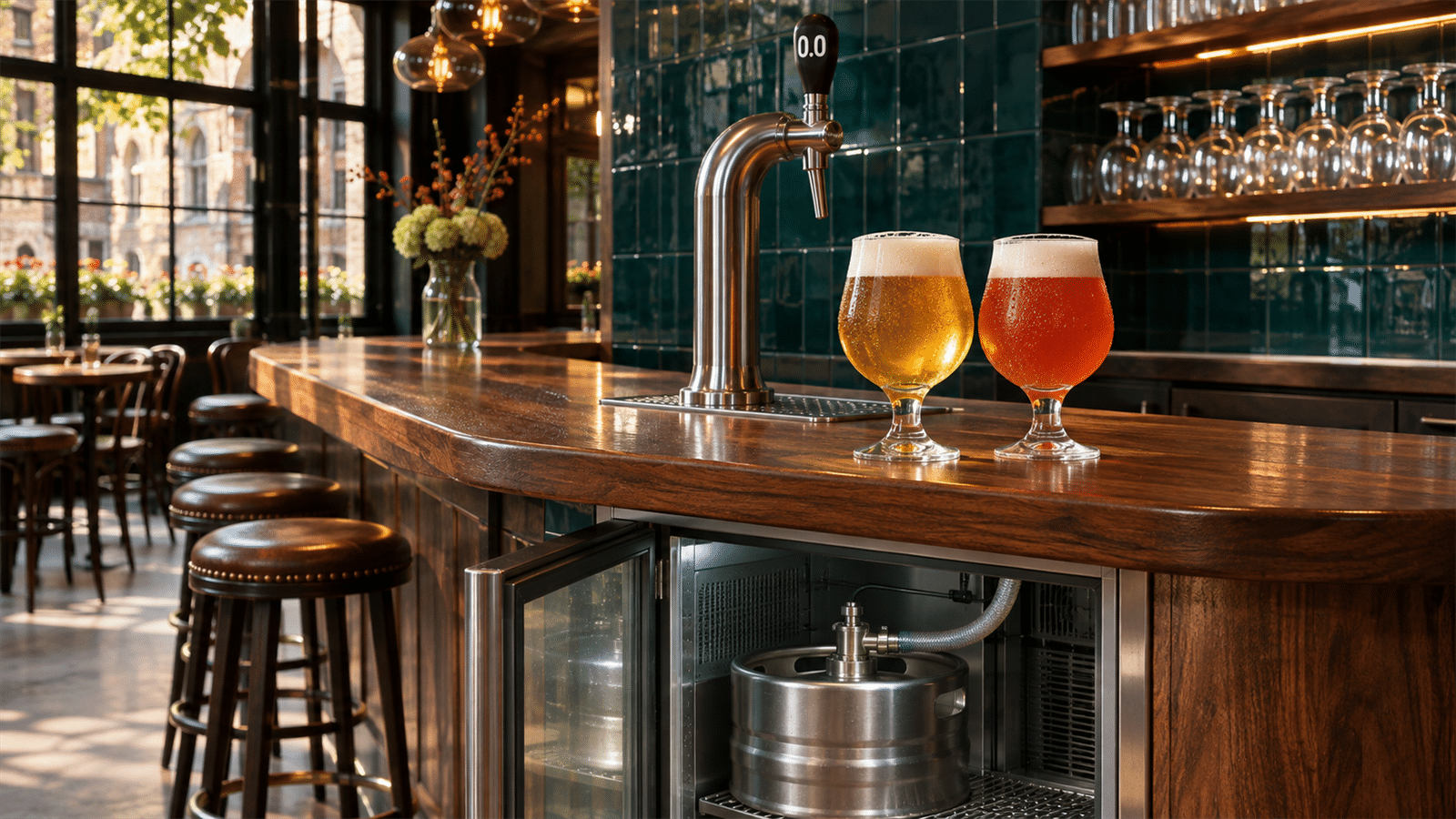
A product launch can require investment beyond the product. RetailDetail reported on November 13 that Belgian brewer Haacht is putting €660,000 into in-house alcohol-free production and €200,000 into adapted tap systems at hospitality partners. The reported €860,000 total makes a useful marketing question tangible: can the point of consumption deliver the experience that a campaign promises?
The lesson is a proposed way to evaluate launch readiness, not a claim that this investment has already produced a return. Separate making a product from making it reliably available in the intended channel. Only then decide how much demand the next advertising wave should try to create.
Read the equipment budget as part of the proposition
The report describes refrigerated, interchangeable lines for serving the alcohol-free beers and a staged rollout for Primus 0.0 and Super 8 Blood Orange 0.0. It places supermarket cans in March 2027. Earlier official Haacht coverage of an alcohol-free hospitality initiative provides background, but does not independently confirm the new investment or its results.
The important strategic distinction is between a product being announced and a customer being able to obtain the promised version in a particular place. A manufacturing milestone answers the supply question. Partner equipment answers a different question about delivery at the last metre. Neither milestone, on its own, establishes profitable demand.
Separate production-ready from outlet-ready
For a comparable launch, maintain two readiness lists. The first covers the product’s availability from production and distribution. The second covers the intended outlets: the right equipment, trained staff, a clear serving process and verified stock. Technical and food-safety requirements must come from qualified operational owners; a marketing checklist cannot supply them.
Ask a simple commercial acceptance question at each outlet: can a customer order and receive the advertised offer under the conditions the campaign describes? An outlet on a distribution plan is not necessarily an outlet ready to serve. Record who verified readiness and when it should be checked again.
Match campaign geography and timing to real availability
Use the readiness record to define where promotion can run and what it can claim. A hospitality introduction and a later supermarket format serve different purchase situations. Combining them in one unqualified availability message can make the announcement sound broader than the actual offer.
A practical approach is to approve local promotion only after the corresponding outlet has passed acceptance. Give sales, operations and marketing one shared list of places that are ready, still being installed or awaiting supply. These are suggested launch controls, not practices reported as Haacht’s own execution. The purpose is to connect commercial promises to verifiable delivery.
Measure productive distribution before expanding
Track outlets that actually served the product, repeat orders, unavailable-order incidents and a contribution measure that recognises the relevant channel costs. Distinguish an installed tap from an active outlet. If equipment is present but repeat orders remain weak, investigate customer demand, staff explanation, availability and product experience before assuming more impressions are the missing ingredient.
Also preserve the comparison needed to judge the next expansion: what changed in equipment, distribution, promotion and pricing, and over which complete period? A before-and-after increase alone cannot separate their effects. Use a suitable comparison or a bounded test where feasible, and state the limits of the evidence.
Haacht’s reported spending does not prove an industry-wide growth formula, a legal definition of alcohol-free beer or a sales uplift. It does expose a concrete budget dependency: reach is useful when the channel can fulfil the product promise. For a launch team, that is a reason to include the last metre of delivery in the commercial plan from the start.
Sources
- Haacht Brewery taps into alcohol-free keg: 860,000 euros for Primus 0.0 and blood orange beer
- Alcohol-Free Enjoyment Takes Center Stage at the Opening of the Mediacafé