LinkedIn’s July 1 announcement about brand kit, AI drafting, ad variants and flexible ad creation can sound like just another platform productivity update. It is more important than that. For B2B marketers, the real shift is operational: creative production is being reorganized around reusable brand rules, faster variant testing and platform-native personalization.
That matters because many B2B teams are now trapped between two bad options. On one side, they still produce too few creatives, which leaves campaigns under-tested and over-dependent on one message. On the other side, when they try to scale with AI, quality control starts to erode. Brand voice drifts, claims become softer or stranger, and nobody is fully sure who owns the final output.
LinkedIn is effectively saying that the next stage of AI advertising is not “generate more ads.” It is “generate more ads within a system you can control.” That sounds subtle, but it changes how marketing leaders should think about workflows, review cycles and accountability.
What changed on LinkedIn
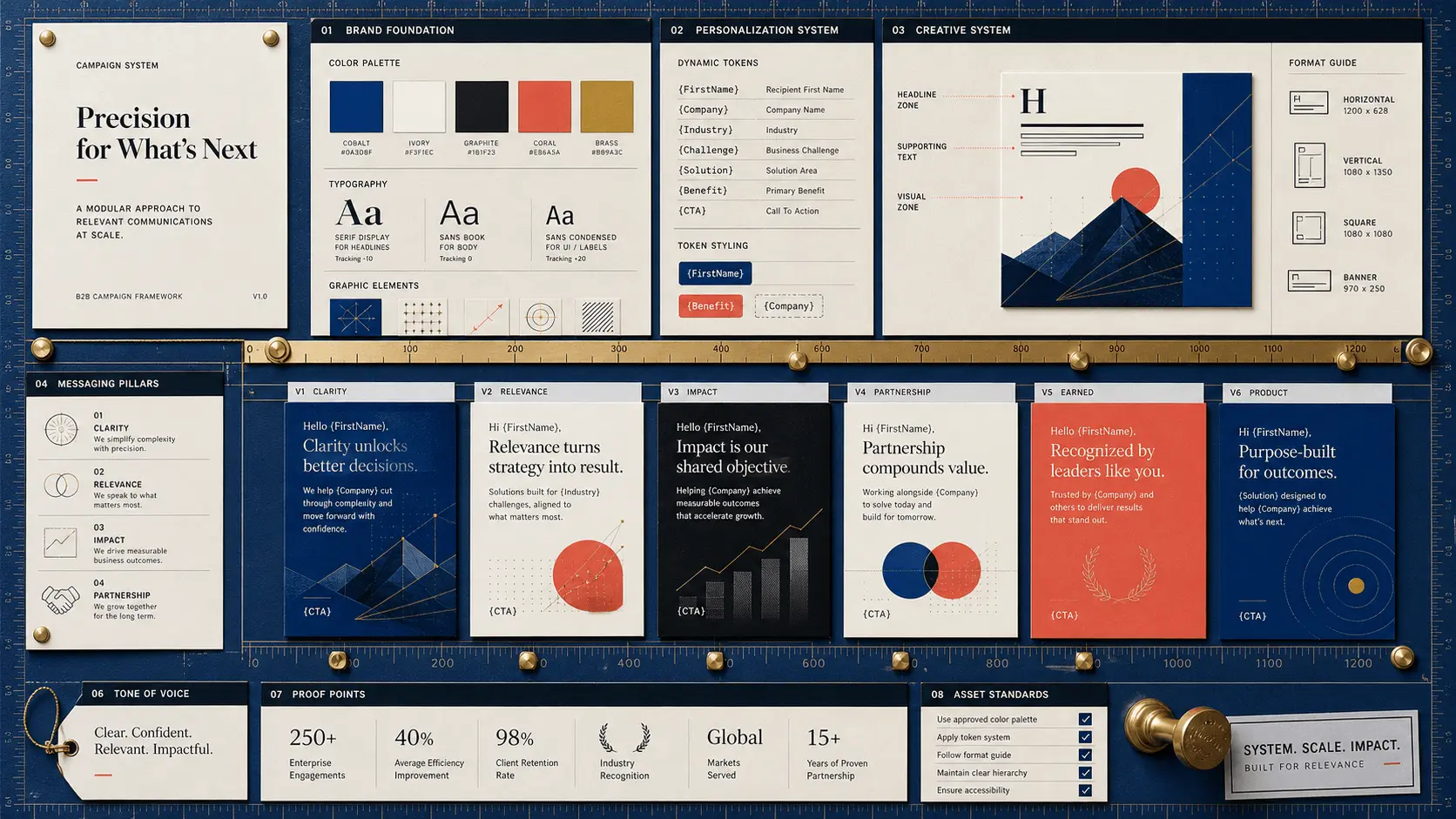
In the official product post, LinkedIn packaged several features into one creative workflow: a brand kit to store colors, fonts, logo and key messages; AI drafting to create initial copy from business inputs; ad personalization tied to audience attributes; AI ad variants for more message testing; and flexible ad creation to recombine inputs at scale. The company also pointed to stronger performance for advertisers who run more variations instead of betting on a single asset.
Individually, none of those ideas is shocking. Most large ad platforms have moved toward some mix of generative copy, automated recombination and personalization. The difference here is that LinkedIn is connecting them as one operating loop. Brand rules come first, generation comes second, testing comes third and delivery optimization comes after that.
For B2B teams, that sequencing is the part worth noticing. The platform is not only helping you write faster. It is nudging you toward a more industrial model of creative output, where consistency and experimentation happen together rather than competing for time.
Why this matters beyond LinkedIn
The deeper issue is governance. When AI tools sit outside the team’s brand system, they create hidden costs: more manual review, more legal anxiety, more inconsistent messaging and more campaign noise that looks like productivity. A team may publish faster while actually learning less, because the extra variants are weak, off-positioning or built on vague prompts.
A brand kit approach tries to solve that by turning identity into structured inputs. That is strategically useful because it makes brand discipline reusable. Instead of briefing every asset from scratch, teams can define what “on brand” means once and push that logic into drafting, testing and personalization. The immediate gain is speed, but the more important gain is that performance teams and brand teams stop working from different source code.
This is also a budget story. If variant production becomes cheaper, the temptation is to flood campaigns with low-value output. The smarter move is the opposite: use the lower production cost to run better experiments. Which value proposition wins by industry? Which proof point converts senior buyers versus practitioners? Which message supports lead generation without weakening brand memory? AI should reduce the cost of learning, not just the cost of publishing.
What a marketing director should do now
Start by treating AI creative as a governed workflow, not a feature toggle. Someone needs to own the rules that shape prompts, claims, tone and personalization boundaries. If that ownership is vague, AI output will become another source of channel friction between brand, demand generation and legal review.
Second, build a testing agenda before you generate a pile of variants. Decide which strategic questions matter: headline tone, proof hierarchy, role-specific messaging, offer framing or CTA design. If the team cannot name the hypothesis behind a new variant, it is probably producing clutter rather than insight.
Third, measure more than click-through rate. LinkedIn itself highlights CTR gains from running more variations, but operators should also watch lead quality, sales acceptance, landing-page engagement and downstream pipeline behavior. A variant that wins cheap clicks but weakens audience fit is not a creative success. It is a reporting trap.
The larger operating lesson
What LinkedIn released is one more sign that ad creative is becoming a systems discipline. The advantage will not go to the team with the most AI tools. It will go to the team that can define its brand rules clearly, turn them into reusable production logic and keep experimentation tied to commercial questions that matter.
That is why this is not just a platform update. It is a management issue. As AI expands across media teams, the brands that scale best will be the ones that know exactly where automation is useful, where human judgment still matters and who is accountable when the machine starts writing on the brand’s behalf.
Source References
- LinkedIn for Marketing Blog: From Blank Page to High Performing Ad: Introducing LinkedIn’s New Creative Tools
- Social Media Today: LinkedIn rolls out new AI-powered promotional tools