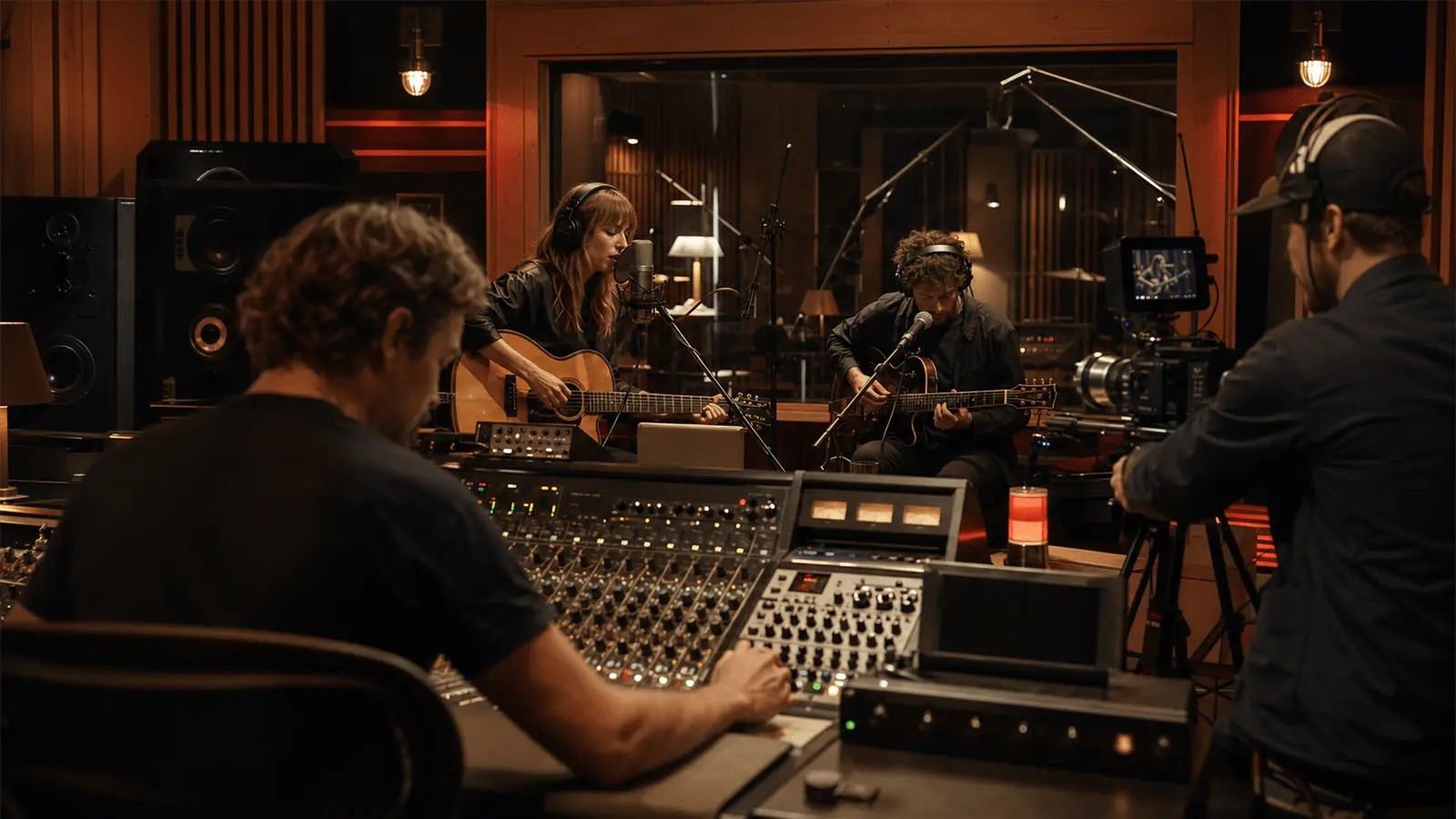
Bose’s decision to create Bose Studios and Bose Records is easy to treat as a curious piece of marketing news. The more useful reading is strategic. The audio company is testing whether a brand can stop renting every moment of attention and start building a media asset of its own. For a chief marketing officer, that raises a harder question than “should we make more content?”: under what conditions can a non-media company operate a credible media product?
The answer is not “whenever paid reach becomes expensive.” An owned show, publication, podcast network, film studio or label can consume more money than a conventional campaign and still fail to earn an audience. It becomes valuable only when the brand has a legitimate cultural territory, a repeatable editorial promise and a distribution system that can compound over time.
The strategic question is not whether a brand can make content
Most brands already produce large volumes of content. Product films, social posts, interviews and campaign assets are designed to support a launch and then disappear from attention. A media product follows different logic. It gives a defined audience a reason to return even when that audience is not actively shopping.
That distinction changes the operating model. Campaign content begins with what the business wants to announce. A media product begins with what the audience would repeatedly choose to watch, hear or read. Campaigns optimise delivery against a fixed message. Media products learn from audience behaviour and develop an editorial identity. The brand is still present, but it is the organiser of value rather than the subject of every story.
Bose has a plausible starting point because music is not an invented association for an audio company. Reports on Bose Studios describe plans spanning artist development, video, podcasts and live experiences. That breadth may create an ecosystem, but it also creates execution risk: several formats do not automatically add up to one audience proposition.
Five conditions that make owned entertainment credible
1. The brand has a natural right to participate
The territory should connect product truth, customer identity and genuine organisational knowledge. A food brand may understand cooking culture; a financial platform may understand how small businesses make decisions. If the connection exists only in a presentation deck, the output will feel like sponsorship disguised as editorial work.
2. The audience promise is specific and repeatable
“Inspiring content” is not a proposition. The team should be able to state who the product serves, what recurring need it satisfies and why the audience would notice its absence. A narrow, recognisable promise is more valuable than a large catalogue with no editorial centre.
3. Distribution is designed before production
Owning content does not mean owning reach. A brand still needs search demand, subscribers, partnerships, creators, paid seeding and formats adapted to external platforms. The owned destination should capture a relationship, while rented channels introduce the work to new audiences. Production without a distribution model is merely an expensive file archive.
4. Rights create reusable value
Ownership matters when one investment can generate multiple assets: episodes, clips, performances, interviews, product experiences, events and licensed material. Clear rights make the library reusable across markets and years. Weak rights agreements can leave the brand paying repeatedly for material it helped finance.
5. Leadership accepts a portfolio time horizon
A media operation cannot be judged like a two-week conversion campaign. Some formats will fail; others may earn disproportionate attention. The business needs a defined testing budget, editorial authority and review points that prevent both premature cancellation and unlimited spending.
How to evaluate the economics
The business case should compare owned media with the full cost of the attention it replaces or improves, not with production cost alone. A useful scorecard covers four layers:
- Audience: qualified reach, repeat consumption, completion, direct traffic, subscriptions and returning users.
- Brand: consideration, preference, distinctive associations and the quality of earned conversation.
- Commercial contribution: assisted demand, first-party signals, partner value, lower creative reuse costs and incremental sales where measurement is credible.
- Asset value: rights owned, library reuse, format durability and distribution relationships created.
The comparison should use cohorts. Do people exposed repeatedly to the media product search for the brand more often, enter owned channels, buy at a higher rate or remain customers longer than similar non-exposed audiences? Last-click revenue will understate the effect, while raw views will overstate it. The credible answer sits between them.
Where brand media projects usually fail
The first failure mode is corporate self-importance: executives assume access to production automatically creates audience interest. The second is aesthetic overinvestment before the proposition is proven. The third is treating distribution as a launch-week task. The fourth is using campaign metrics for a compounding asset, then declaring failure before a habit can form.
There is also a governance problem. If every product team can insert a message, the media product becomes an advertising channel and loses editorial trust. If the editorial team has no commercial mandate, it can build attention that never benefits the business. Strong programmes define the boundary: editorial independence over execution, strategic alignment over territory and transparent rules for product integration.
A 90-day validation plan before building a studio
Start with one audience tension and one repeatable format. Produce three to six pilots at a quality level the organisation can sustain, not at a one-off launch standard. Distribute them through two or three realistic channels, capture direct audience signals and set thresholds before results arrive.
At day 90, ask five questions: Did the same people return? Did the format earn voluntary distribution? Did it strengthen a brand association the company needs? Can production become more efficient without reducing quality? Is there a credible path from attention to a commercial or strategic asset? If several answers are no, the correct decision may be to stop or narrow the idea.
What CMOs should take from Bose
Bose is not proof that every brand should become a media company. It is a useful live test of a broader shift: content can be managed as intellectual property, audience infrastructure and a long-term demand asset rather than as campaign decoration. The opportunity is real, but so is the discipline required.
The best starting point is not a studio, a record label or a large production budget. It is a defensible audience promise, a measurable return path and the willingness to publish something people would choose even if the logo were smaller.
Sources:
Business Insider: Bose is becoming a media company
What Hi-Fi?: Bose is launching its own record label
Content Marketing Institute: The new facts about owned media strategy