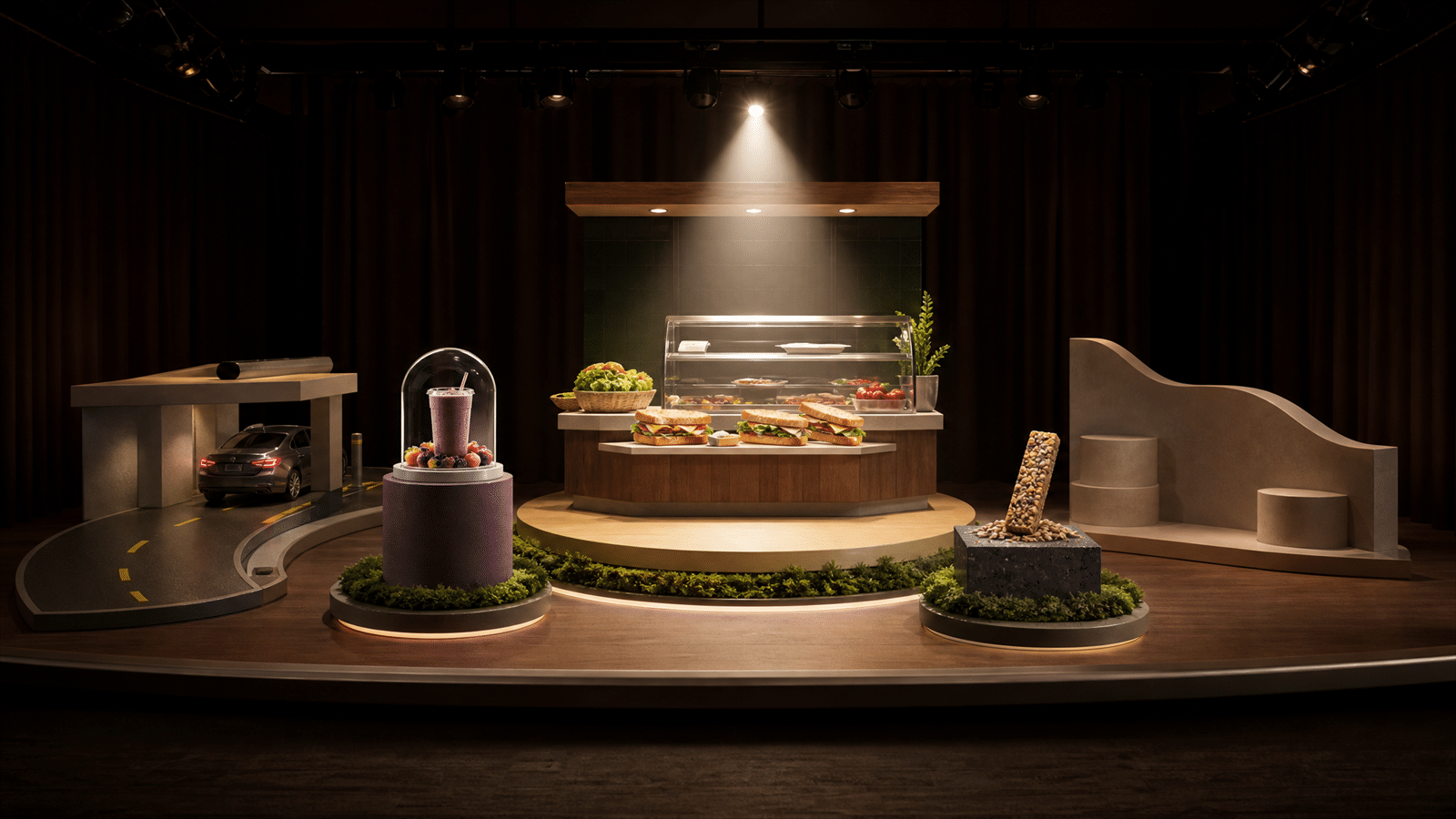
Subway’s new “Feed Your SUBconscious” platform is easy to discuss as a celebrity campaign because Will Arnett plays five characters and gives the work a memorable voice. The more useful marketing lesson is the competitive frame. Subway is not only arguing against other sandwich chains. It is arguing against the whole lunch decision: burgers, pricey smoothies, protein bars, quick compromises and meals that leave people dissatisfied.
Restaurant Dive reported on September 22 that the platform stars Arnett as the subconscious of consumers seeking better meal options at better value. Subway’s September 21 release says the campaign runs across broadcast and streaming TV, streaming audio, digital, social, in-restaurant and owned channels.
The move: widen the decision set
Many mature brands define competition too narrowly. A QSR brand may obsess over the chain next door while the customer is comparing lunch against a smoothie, a meal-prep box, a convenience-store snack or skipping the meal. Subway’s platform works because it names those alternatives and makes them part of the joke.
That matters for any retail or ecommerce brand under value pressure. If you only compare yourself with direct category rivals, price becomes the easiest battlefield. If you compare yourself with the full decision set, you can talk about satisfaction, convenience, flexibility and regret avoidance.
Value without becoming only a discount
The campaign’s value argument is not only lower price. It links value to a more satisfying choice: freshly prepared food, customization, vegetables, bread and convenience. That is important because pure discounting is easy to copy and hard to sustain.
A stronger value platform answers four questions. What poor alternative is the customer tempted to choose? What feeling follows that choice? What product proof makes your brand the better option? And where can the customer act immediately?
Why the inner voice works
The subconscious device gives the brand permission to dramatize consumer doubt. It turns a rational positioning into a recognizable moment: standing in line, considering a weak meal and knowing it will not satisfy. That is more useful than saying “we offer value” in isolation.
For other brands, the device does not have to be a celebrity or a comic character. The principle is to give the customer’s internal trade-off a clear shape. If the audience already feels the tension, the campaign does not need to invent it; it needs to name it and connect it to product proof.
The operating checklist
Before copying the tactic, brief the operating pieces. First, define the full alternative set, not just direct competitors. Second, choose the customer tension that is already true. Third, protect the product proof so the campaign does not become only entertainment. Fourth, adapt the idea across channels where the decision happens: store, delivery, search, social, loyalty and retail media.
The last step is measurement. A platform like this should be judged by more than video views. Track menu interest, store or delivery actions, offer engagement, repeat visits and whether value perception moves without training the customer to wait for discounts.
The risk
Celebrity work can become a shortcut that hides weak strategy. If the audience remembers the actor but cannot remember the reason to choose the brand, the campaign has not done enough. Subway’s useful lesson is not “hire a famous voice.” It is: make the customer’s decision conflict vivid, then make the product feel like the sensible way out.