Brand teams talk constantly about relevance, but many still try to manufacture it through campaign timing alone. A cultural holiday arrives, a sports moment spikes, a creator trend gets hot and the brief becomes: find a brand-shaped way to join the conversation. Sometimes that works. Often it produces disposable awareness. Vitaminwater’s refreshed Neighborhue platform points to a more durable model. The interesting part is not that the brand is supporting murals. It is that the brand is using local cultural infrastructure as the surface where the story lives.
Marketing Dive reported on July 9 that vitaminwater is expanding Neighborhue with My Code and Remezcla into a second season, moving from New York into Orlando while continuing to center muralists and neighborhood identity. The syndicated PR Newswire release adds the broader distribution logic: documentary-style video, editorial storytelling and short-form social content across Instagram Reels, TikTok, YouTube Shorts and My Code’s owned media ecosystem. That combination matters because it treats brand storytelling as a platform, not a single campaign asset.
Why community infrastructure is more useful than another campaign burst
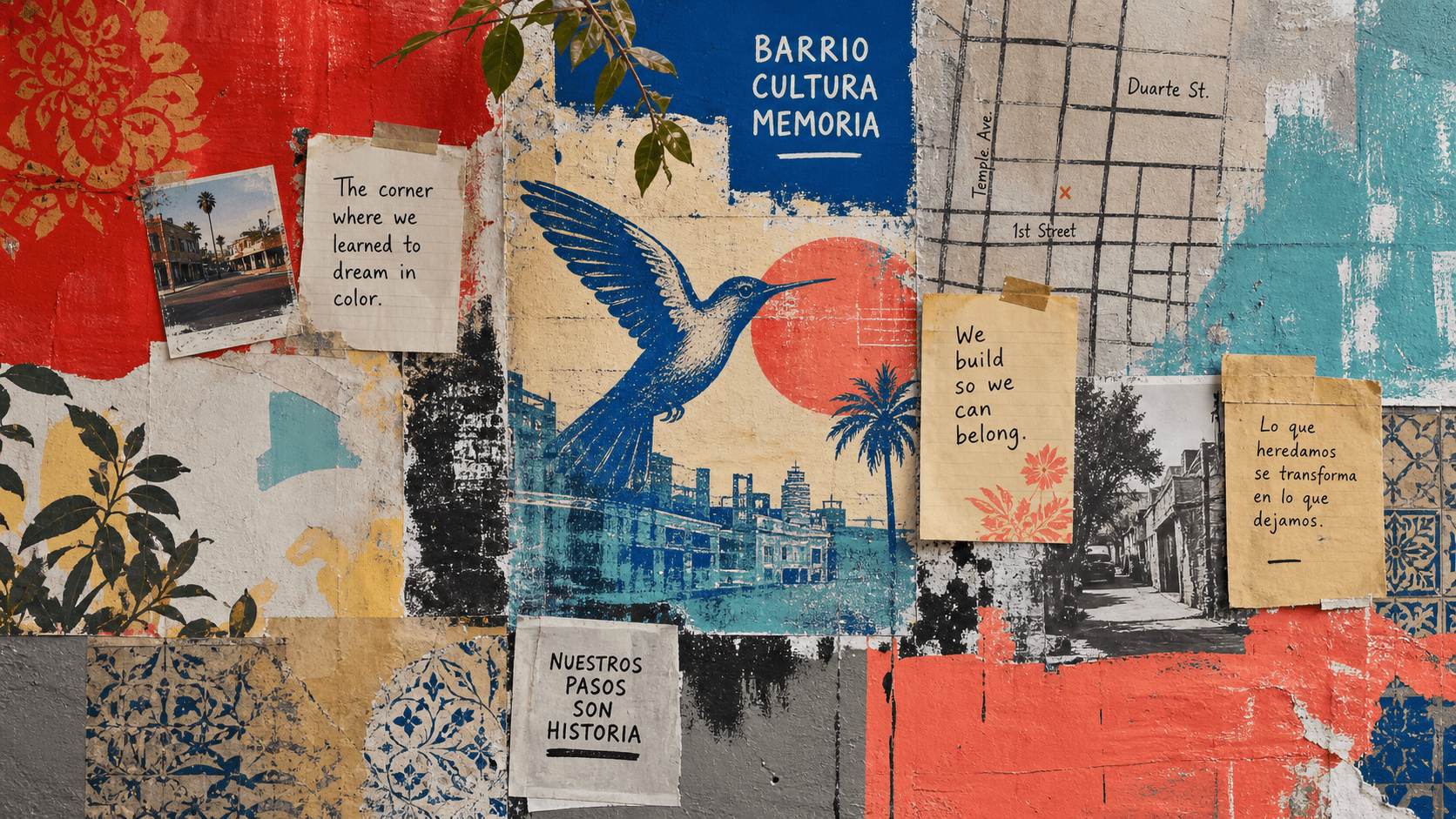
Too much culture-led marketing still behaves like extraction. A brand spots a community, aesthetic or movement that already has energy, borrows the surface signals for a few weeks and then disappears. The audience may see the content, but the brand rarely leaves with deeper meaning. Neighborhue is more interesting because the object at the center is not a slogan or a product demo. It is public art that already holds memory, identity and local authorship.
That changes the role of the brand. Instead of asking a neighborhood to revolve around the campaign, the campaign revolves around something the neighborhood already recognizes as meaningful. Murals are not just visual backgrounds. They are social objects. They mark belonging, memory, aspiration and continuity. When a brand builds its content platform around that kind of object, it has a better chance of sounding contextual instead of opportunistic.
This does not automatically make the work authentic. But it does create better conditions for authenticity than a generic “we celebrate community” burst backed by paid reach and a few influencer posts. The medium itself carries more cultural weight.
What Neighborhue gets right about cultural authority and distribution
The second useful lesson is distribution design. The PR Newswire release describes a stack that moves from hero documentary storytelling to editorial features and then into short-form social. That is smarter than flattening the whole idea into one content shape. A community-rooted story usually needs depth somewhere and portability elsewhere. Documentary gives context. Editorial adds interpretation. Short-form social gives the work travel speed.
The platform also benefits from using My Code and Remezcla as cultural operators rather than treating distribution as a pure media extension. This matters because credibility in multicultural and community-based work is not just a targeting exercise. It depends on who frames the story, whose language carries it and whether the community feels represented from within or observed from outside. My Code’s CEO captured that logic well in the PR release when she argued that growth audiences are reached by showing up inside real stories rather than talking at them.
That is the broader brandformance lesson. Relevance is not only about reach. It is about the quality of context around the brand. When the brand enters a story through trusted local creative authority, the message can travel further without feeling as forced.
How brand teams should borrow this logic without becoming extractive
The first rule is to choose community systems that have an actual relationship to the brand’s role in people’s lives. Vitaminwater can plausibly position itself around color, energy, neighborhood expression and everyday cultural participation. Another brand may have a very different lane. The temptation is to copy the visual look of a mural program without asking whether the business has earned the right to stand there.
The second rule is to think beyond the hero moment. Community-centered work becomes shallow when the brand appears for one burst and then vanishes. The stronger model is to create continuity: repeated appearances, multiple storytellers, evolving formats and proof that the platform is not simply a short-term media costume. Season-two logic matters here. It signals that the idea is being treated as an asset worth building, not a stunt worth posting.
The third rule is to let local authority shape the narrative. Many brands still want community work to fit a pre-written corporate moral. That usually weakens the result. If the campaign is meant to borrow cultural credibility, then the safest path is to reduce control over the framing and increase respect for the people who already carry meaning in that space.
The larger takeaway is that branded storytelling becomes more powerful when it attaches itself to structures that communities already care about. Neighborhue is useful not because murals are trendy, but because the platform recognizes that public art can function as memory, identity and shared language. Brands that understand that will stop treating relevance as a calendar event and start treating it as a system of place, authorship and continuity.
Source References
- Marketing Dive: Vitaminwater doubles down on content series celebrating local art
- PR Newswire via Barchart: My Code and vitaminwater Launch Neighborhue: Still in Color