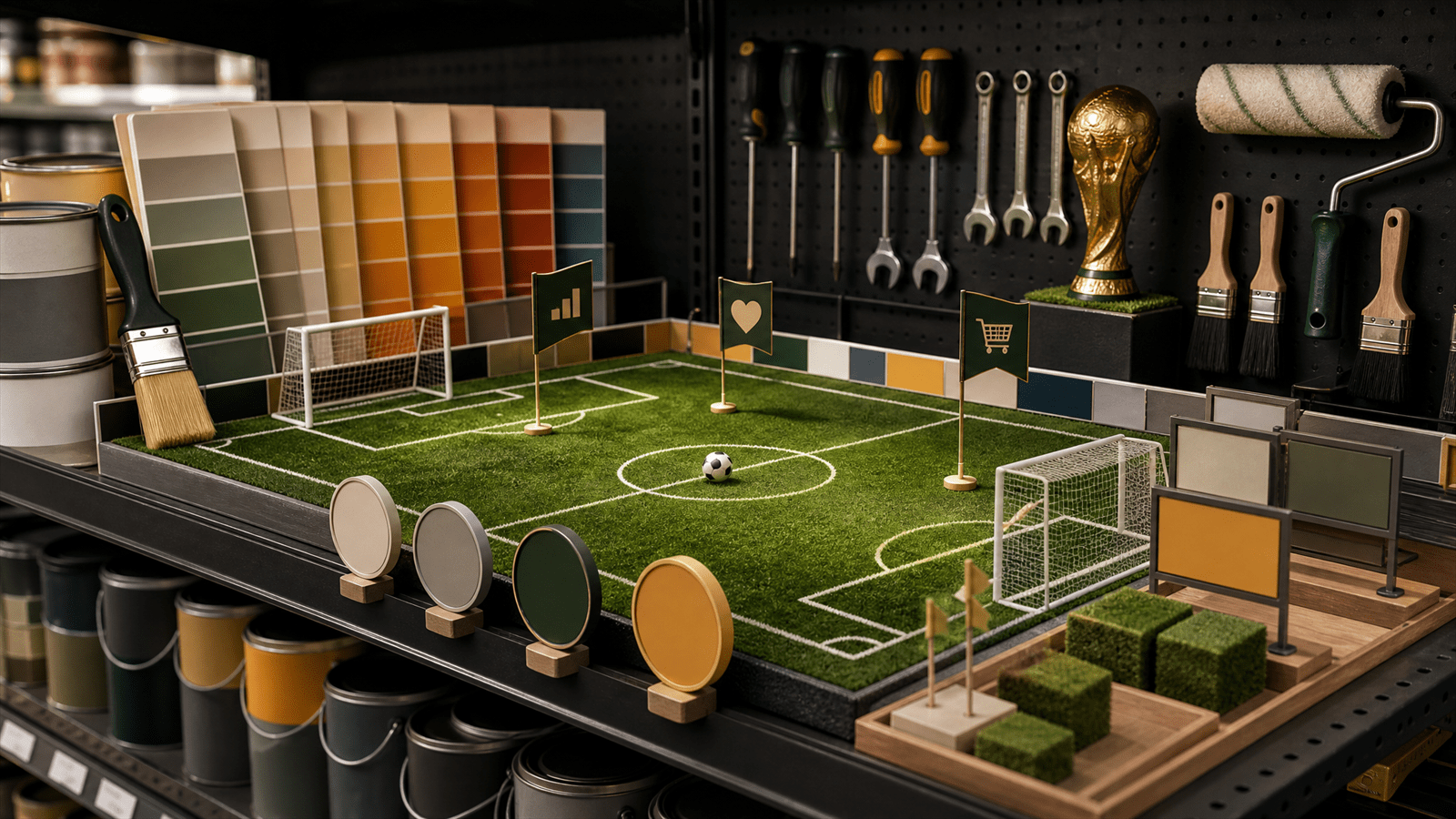
The next phase of retail media is not only about putting more sponsored products near a cart. The more interesting question is whether a retailer can turn a cultural moment into a measurable brand environment for supplier partners.
Digiday reported on September 11, 2026 that The Home Depot’s Orange Apron Media is using the World Cup to connect pro customers, Hispanic consumers, supplier brands and experiential activations. The point is not that every retailer needs a soccer plan. The point is that retail media networks are learning to sell context, not just inventory.
Why the case matters
Retail media has often been judged through lower-funnel proof: sales, return on ad spend and closed-loop attribution. Those metrics matter, but they can make every network sound similar. Cultural-event media gives a retailer a different pitch: we understand a community, a project, a store mission and the products that naturally fit the moment.
For Home Depot, the World Cup can connect to multicultural growth, professional contractors, DIY gatherings, paint projects, tools and in-store activations. That is more defensible than a generic sports sponsorship because the retailer can explain why its audience and supplier categories belong in the moment.
A cultural-fit framework
Audience fit. The event audience should overlap with a valuable retailer audience, not only a broad media demographic. In this case, Hispanic and pro customer segments create a stronger business reason than soccer reach alone.
Category fit. Supplier partners need a believable product role. Paint, tools and home project categories can connect to viewing parties, renovations, jobsites and seasonal household work.
Store fit. Retail media becomes more powerful when the idea can appear in store, online, off-site and through supplier content. The store is not just a fulfillment point; it is part of the media environment.
Measurement fit. A cultural campaign should not be forced into immediate last-click logic. Brand lift, purchase intent, store visits, category search and later sales all need a place in the scorecard.
What suppliers should ask
Supplier brands should ask which audience segments are reachable, which creative assets can be co-built, which stores or markets matter, how exposure will be connected to intent, and what success looks like if the sale happens weeks later. They should also ask what the retailer can prove that a generic sports media buy cannot.
The strongest answer is not simply first-party data. It is the combination of audience data, category context, store activation and commercial measurement. If the network cannot join those pieces, the cultural premium is hard to defend.
The operating lesson
Retail media networks that want brand dollars need to become better at planning beyond the product grid. They need event calendars, community insight, supplier collaboration, creative governance and measurement that respects both brand and commerce outcomes.
For marketers, the lesson is to stop asking whether retail media is a performance or brand channel. The better question is whether the retailer can connect the cultural moment to a real shopping mission and then measure the path with enough honesty. That is where the next retail media advantage will come from.