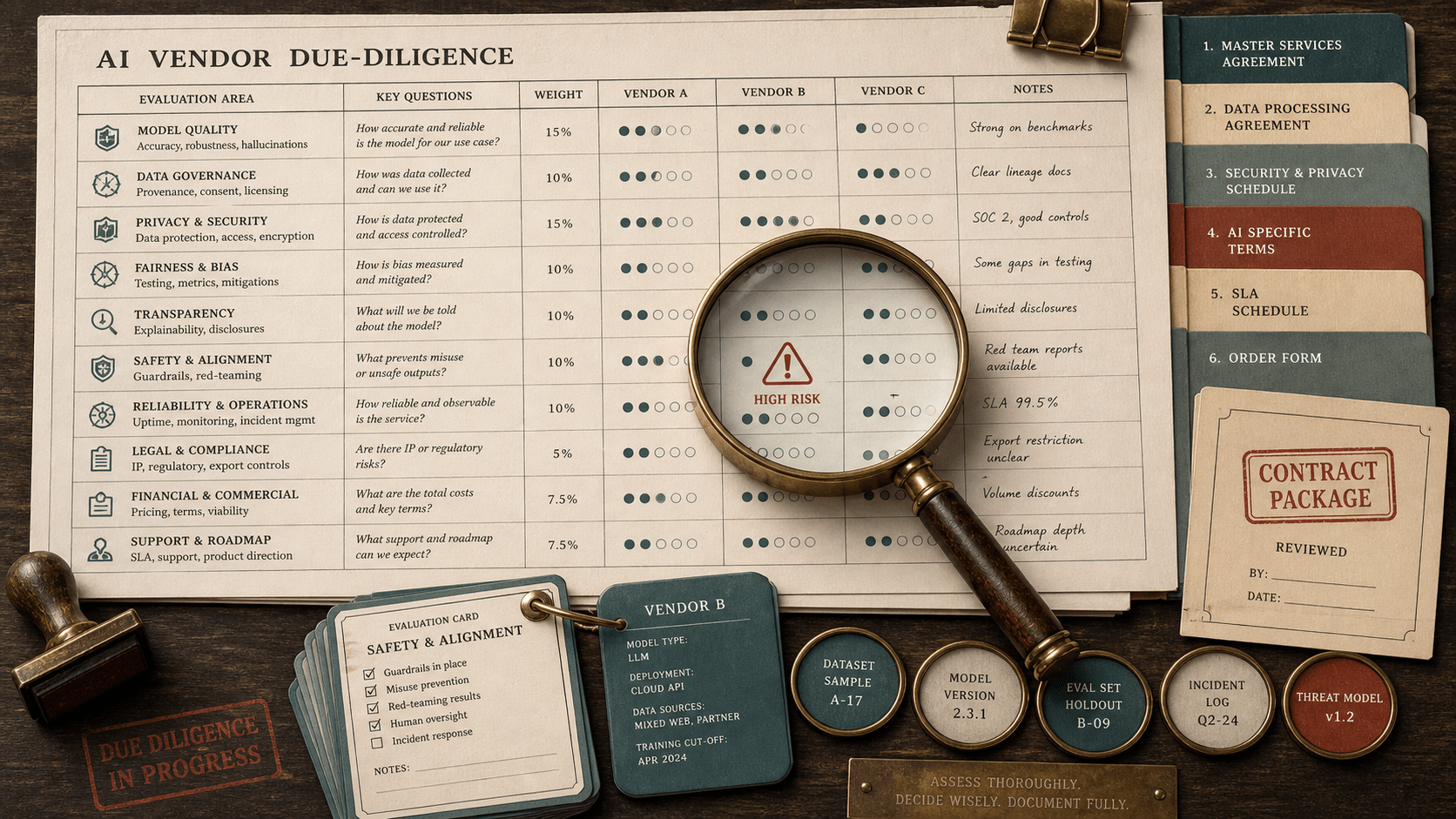
AI vendor outreach now hits marketing teams with the same rhythm that martech sales outreach once did: urgent claim, polished demo, implied competitive risk if you wait too long. That pace creates a predictable buying mistake. Teams evaluate how advanced the product looks before they evaluate whether it solves a business problem they can actually operationalize. MarTech’s July 13 framework is useful because it cuts through the performance theater. It argues that the right first move is not asking what the model can do. It is asking what operating problem the tool removes, what proof exists, what happens to your data and what the implementation really costs.
For senior marketers, this matters because AI procurement is no longer a side experiment. It changes workflow design, vendor risk, internal training and reporting expectations. A cheap monthly tool that quietly adds review burden, legal ambiguity and integration work is not a cheap tool. It is a new operating system tax. Many teams are still counting software price and ignoring the internal lift required to make the product trustworthy enough for live campaigns.
Why most AI demos answer the wrong question
The classic AI pitch is built to trigger FOMO. A vendor shows faster output, better summaries, easier optimization or fewer repetitive tasks. Those claims can all be true and still be strategically weak. If the vendor cannot explain the exact business problem being solved, the team is not buying a solution. It is buying optionality and hoping value appears later.
That is why the first screening question matters so much: what problem does this tool solve? Not in product language. In operating language. Does it reduce time to launch? Does it identify tracking failures earlier? Does it improve quality control in creative review? Does it remove a reporting bottleneck that slows budget decisions? If the answer stays trapped in feature talk, the tool is probably being sold to marketers, not built for their work.
This is also where many teams misread the phrase “saves time.” Saved time is not value unless the business knows what that time gets reinvested into. More testing, better QA, faster diagnosis and stronger client communication are value. Unallocated spare minutes are not.
The five checks that separate useful tools from expensive theater
MarTech’s framework is strong because it moves from hype to due diligence fast. The five checks are straightforward: problem fit, domain expertise, proof, data handling and implementation reality. Together they force a much healthier conversation.
Problem fit tells you whether the tool belongs in your stack at all. Domain expertise tells you whether the team behind it actually understands the work context. A vendor that cannot speak credibly about media-buying workflow, campaign QA or stakeholder reporting is likely abstracting the problem too loosely. Proof matters next. Case studies should not just exist; they should be relevant. Similar company size, similar use case, similar constraints. Otherwise the numbers are decorative.
Then comes the part many teams still treat as procurement admin: data rights. This is a strategic issue. If a vendor is vague about whether your data trains shared models, how long it is retained or what happens when you leave, that is not a small contract concern. It goes directly to trust, defensibility and future switching cost. The same goes for implementation. If adoption requires hidden engineering time, extensive manual QA or process redesign, then the “easy AI win” may be more expensive than the status quo.
How to buy AI without creating a new operating burden
The practical goal is not to slow every purchase down into committee paralysis. It is to raise the standard of experimentation. Good pilots have explicit success criteria, bounded data exposure and honest expectations about internal lift. They also come with contract flexibility if the buyer is effectively helping the vendor mature the product.
That is the real strategic distinction. Strong marketers are not the ones who buy the most AI tools first. They are the ones who know when a product is solving a real bottleneck, when it is shifting work into another department and when the risk sits inside the fine print rather than the demo itself. As AI software multiplies, that judgment becomes a competitive asset.
In other words, AI procurement is no longer a curiosity. It is part of marketing operations design. The teams that treat it with that level of seriousness will waste less money, adopt faster where it counts and stay far less vulnerable to the next polished tool that sounds inevitable because everyone else is already talking about it.