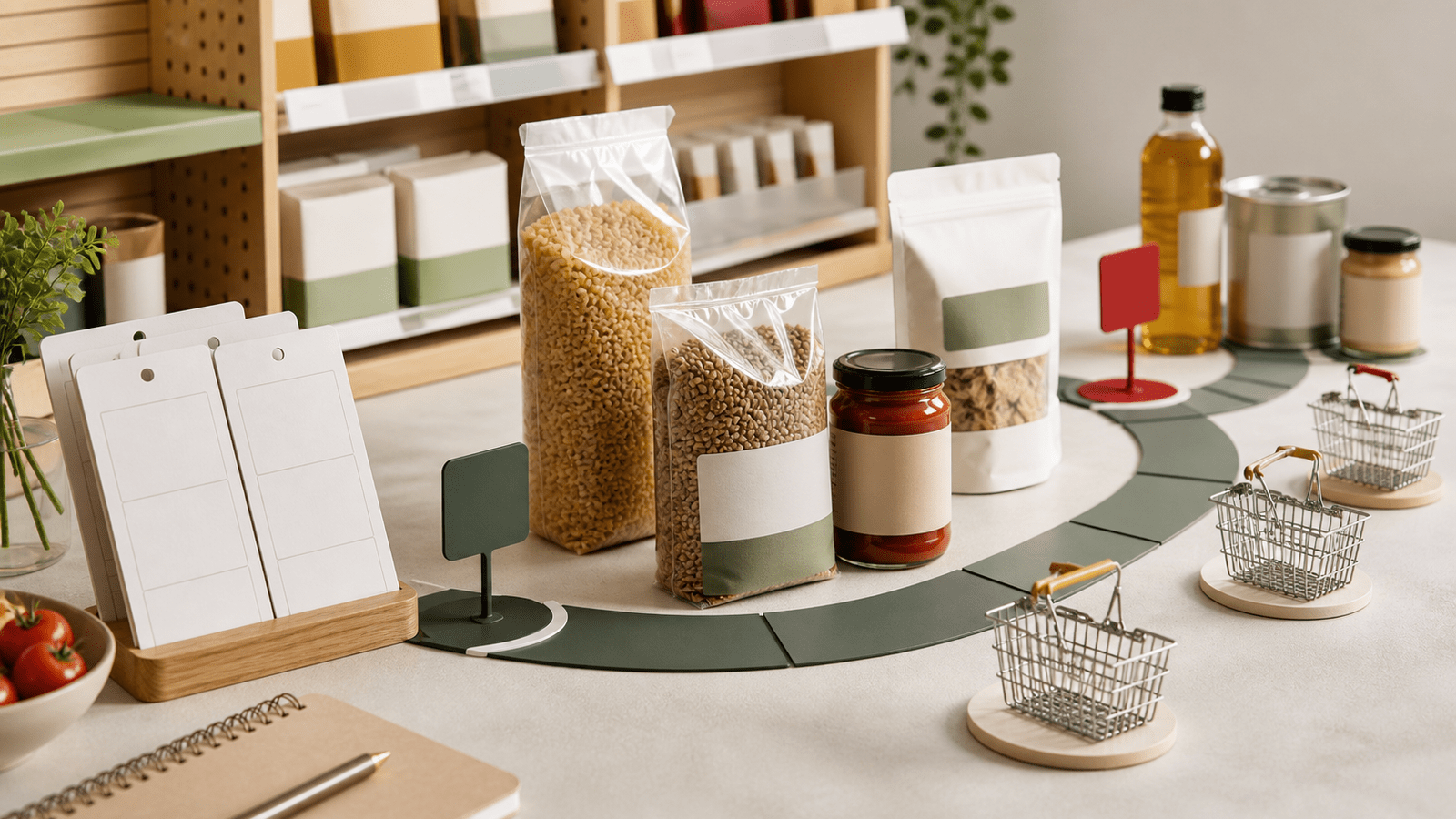
Kroger’s new AI Shopping Assistant is now available across the company’s websites and apps, according to Kroger’s July announcement. The tool helps shoppers plan meals, discover products, build carts from a written list or recipe URL, and find items around budget or dietary needs. The fresh marketing signal is how fast retail media moved into the experience: Modern Retail and MediaPost reported in early August that product listing ads are part of the assistant experience, with sponsored products appearing alongside organic recommendations.
That makes the case useful beyond grocery. Retail media has been built around search results, category pages, product pages and off-site audiences. Conversational shopping changes the surface. The customer is not only searching for a brand or browsing a shelf; they may ask for lunchbox ideas, a dinner plan, a party list or a cheaper substitute. The ad opportunity is closer to a decision assistant than to a static placement.
Why this is different from search ads
In classic retail search, the query usually reveals product intent. In an assistant, the prompt may reveal a job to be done: feed a family quickly, avoid allergens, stay under budget, prepare for school, or build a basket for an occasion. Sponsored products can be useful if they fit that job. They become intrusive if they distort the answer or make the assistant feel less trustworthy.
The operating question for brands is therefore not only whether to buy the placement. It is whether the product data, pricing, availability, reviews and substitution logic are good enough for the assistant to recommend the product credibly.
A retail-media readiness model
- Map the shopper jobs where your product naturally belongs: meal planning, replenishment, comparison, occasion building or budget substitution.
- Improve product data before bidding: pack size, ingredients, allergens, price, availability, images and use cases.
- Separate sponsored visibility from assistant trust; the ad should support the answer rather than overpower it.
- Measure basket contribution, repeat purchase and substitution behavior, not only clicks.
- Ask the retailer how sponsored results are labeled, ranked and excluded from sensitive prompts.
For ecommerce and CPG teams, the assistant format also changes creative. A product image and title still matter, but the product must be understandable inside a task. “Good for packed lunches”, “works for a 20-minute dinner” or “fits a gluten-free basket” can become commercially meaningful product information.
What marketers should copy
Do not copy the grocery use case mechanically. Copy the discipline. Retail media is moving toward moments where data, guidance and purchase action sit in one interface. Brands need to know which moments they have permission to join, what proof makes the recommendation useful, and how to measure value without damaging trust.
The lesson from Kroger is that assistant commerce will not wait for a long separation between product utility and monetization. Ads can arrive at launch. That puts more responsibility on retailers to preserve transparency and on brands to earn their place in the answer.