Marketing Dive reported on August 6 that Fossil’s Q4 2025 holiday campaign generated 58.8 million impressions, nearly four times its initial goal of 14.7 million. The watchmaker worked with Digital Culture Group, ReachTV and Assembly, using airport TV, in-flight Wi-Fi on JetBlue and American Airlines, and mobile placements to reach holiday travelers.
The case is useful because it is not only a media-placement story. Digital Culture Group’s Audience Resonance Index was used to identify three traveler profiles: tech-savvy watch enthusiasts, shoppers with household income of at least $75,000 looking for premium items, and fashion-forward millennials likely to engage in gifting. The campaign then matched the audience to a specific occasion: travel during peak gifting season.
Why the occasion matters
Retail media often starts with data access: which audience can be bought, which retailer or commerce partner owns the signal, and whether closed-loop reporting is available. That is necessary, but it can make planning too inventory-led. Fossil’s campaign points to a better question: where is the customer when the purchase problem becomes active?
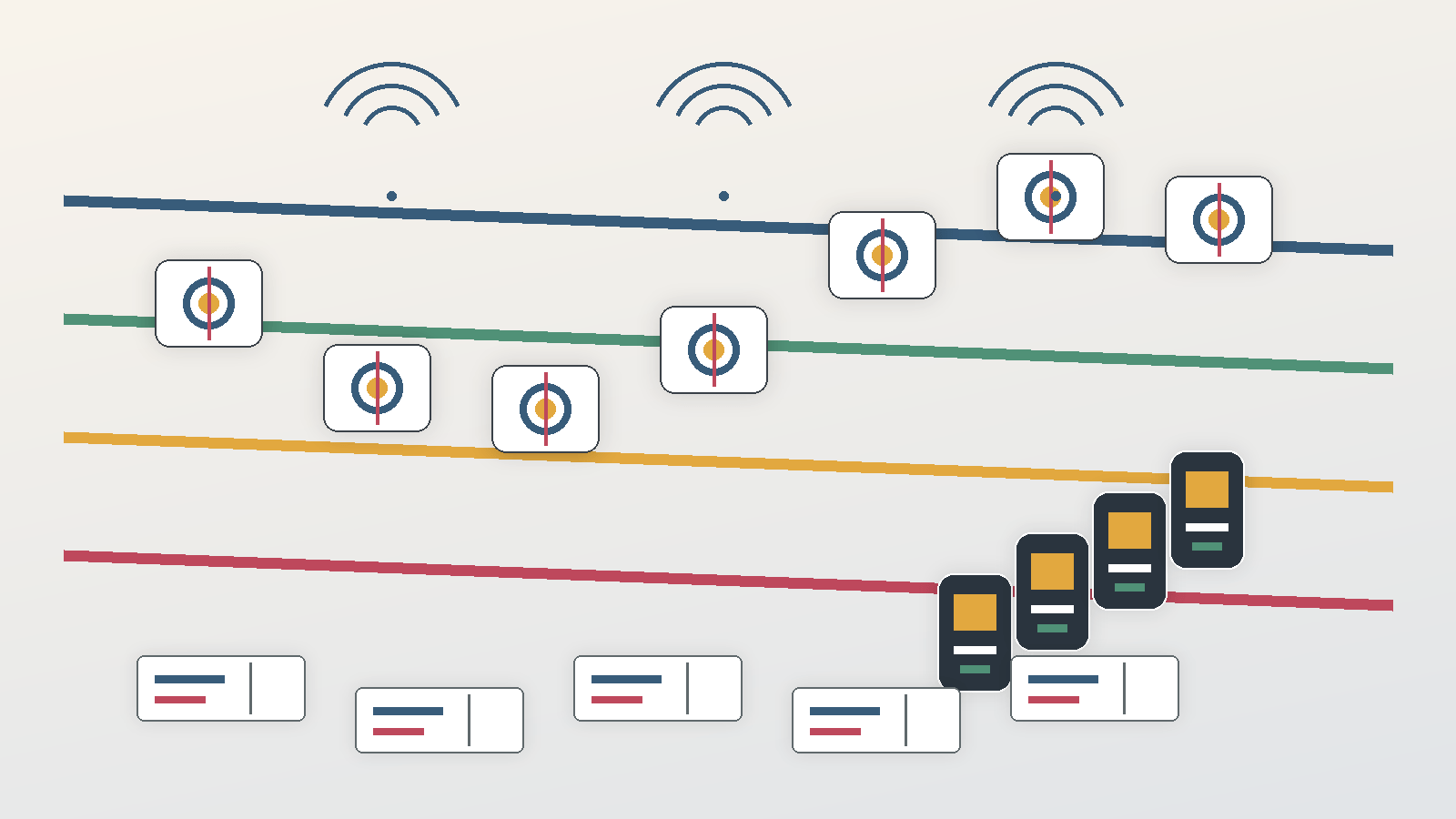
Holiday travel creates dead time, gift pressure and mobile attention. An airport screen, Wi-Fi pre-roll and a mobile unit do different jobs in that moment. One can create recognition, one can interrupt an idle media session, and one can move the shopper toward a pop-up or product destination. The plan works only if the channels are connected by the same occasion.
An occasion-led retail media framework
- Define the buying moment before choosing the media network.
- Build the audience from behavior and context, not only demographics.
- Give each channel a role: recognition, reminder, comparison or conversion.
- Make the next action easy on the device the customer is already using.
- Judge results against the original goal, incremental demand and repeatable learning.
This is especially important as off-site retail media expands into video, CTV, travel, payment, delivery and publisher inventory. The more surfaces a campaign uses, the more discipline it needs. Otherwise the plan becomes a collection of placements that happen to share a target audience.
What marketers should copy
Do not copy the airport setting unless your category has a real travel occasion. Copy the operating logic. Choose a moment where the customer is receptive, define the reason the product fits that moment, then connect media surfaces to a clear next step. A beauty brand, grocery brand, electronics seller or B2B software company can use the same logic with different contexts.
The business lesson is that retail media is becoming broader than retail inventory. It is a way to combine commerce data, contextual attention and a measurable action. Fossil’s result is a reminder that the strongest campaigns do not only find an audience. They meet the audience at a moment when the product makes sense.
Source References
- Marketing Dive: Fossil ads using AI to identify target profiles earn 58.8M impressions
- Marketing Dive: Retail media’s standardization race is heating up