Most event campaigns treat the big day as the media moment. Hoka’s New York City Marathon run-up does something more interesting: it treats the training period as its own campaign stage. Modern Retail and Digiday reported that Hoka is using a sponsored Strava challenge, digital out-of-home placements, creators, paid social and a community event to build attention before race day.
That is a useful case for retail marketers because the mechanism is not limited to running. A brand with a strong participation community can create a measurable pre-event arc: people do the thing, the brand reflects their progress back to them, creators add local proof and paid media amplifies the shared momentum.
The Campaign Product Is the Run-Up
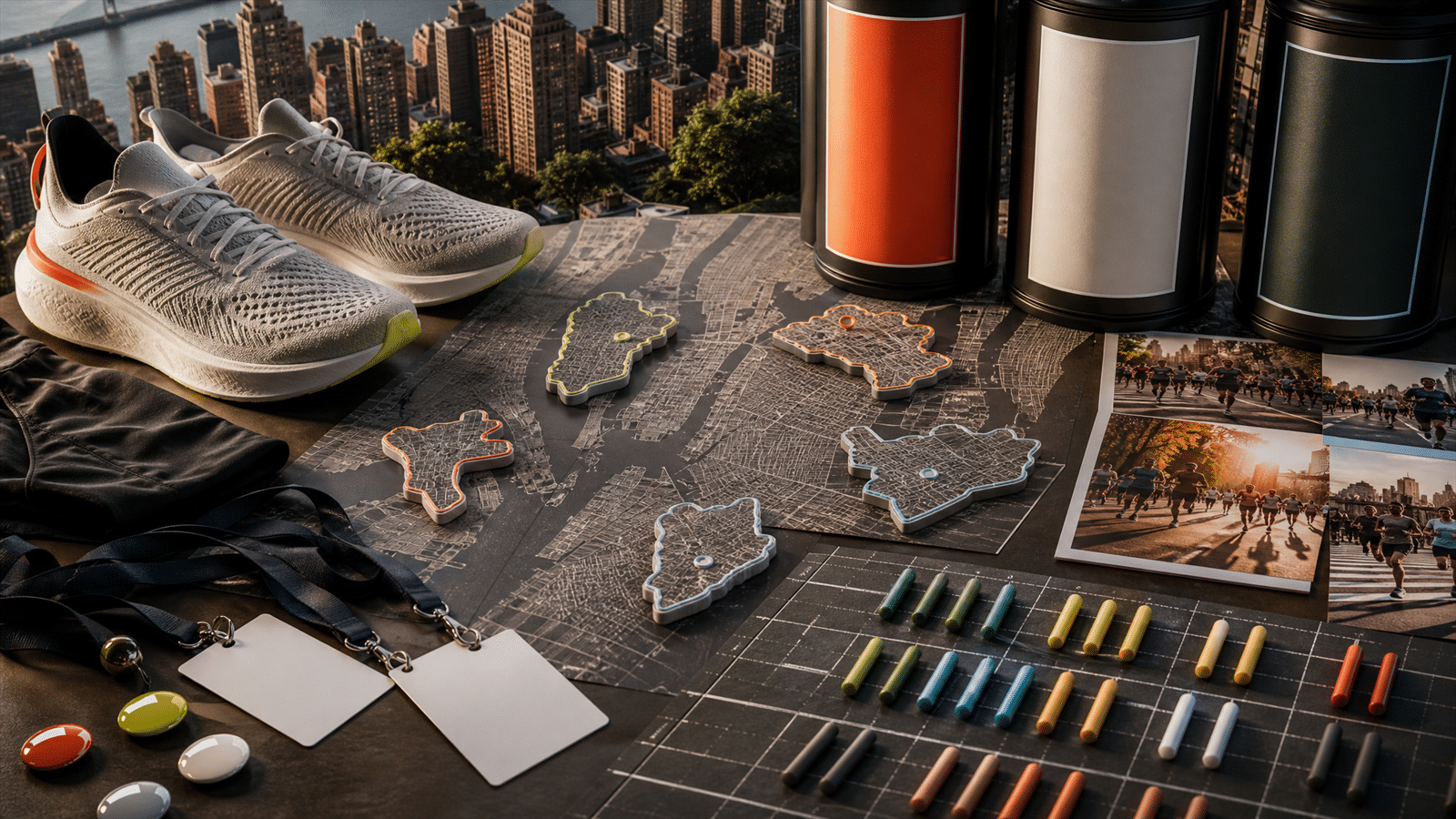
The New York City Marathon is a powerful cultural moment, but marathon training lasts for months. Hoka’s move recognizes that runners are emotionally invested long before they reach the start line. The campaign uses the work of training as content: borough progress, shared effort, outdoor scoreboards and creator-led encouragement.
This matters because running has become more social. Run clubs and marathon participation give footwear brands something that is harder to buy with media alone: recurring identity. The participant is not merely a viewer. They are training, posting, comparing routes and discussing gear with peers.
A Practical Media Model
There are four useful layers. First, participation data: the Strava challenge gives the campaign a behavior to organize around. Second, public reflection: digital out-of-home turns progress into a citywide signal. Third, creator credibility: local voices make the work feel social rather than corporate. Fourth, event conversion: the block party gives the campaign a physical moment that can become fresh content afterward.
The point is not that every brand needs a Strava challenge. The point is to design the pre-event period as a sequence. What action do people take? How does the brand recognize it? Where does the community see itself? What follow-up content extends the moment?
The Budget Implication
Deckers reported Hoka net sales growth in its latest quarterly results, and its filings show meaningful advertising, marketing and promotion expense behind the brand. As competition in running intensifies, community attention becomes a margin defense as much as a brand play. If a runner trains with a brand for weeks, the brand has more than an impression; it has a place in the ritual.
The risk is measurement. A campaign like this can generate participation, social reach and local visibility without proving short-term sales. Marketers should define leading indicators before launch: challenge sign-ups, repeat activity, creator engagement, store visits, email capture, product-page lift in the city and post-event retargeting pools.
The Takeaway
Hoka’s lesson is that the run-up can be the product. For retail brands built around hobbies, seasons, launches or local rituals, the valuable media window may begin weeks before the headline event. The strongest campaigns do not only sponsor attention; they give the community a reason to see its own progress.
Source References
- Modern Retail / Digiday: Behind Hoka’s bid to own the NYC marathon’s run-up period
- Deckers Brands Q1 FY2027 results
- Deckers Form 10-Q for quarter ended June 30, 2026