The FTC lawsuit against Amazon should make retail-media advertisers ask a harder question than whether the platform is still worth buying. The better question is whether the economics of the channel are documented well enough for a finance leader to trust them.
On August 31, 2026, the Federal Trade Commission and 22 states sued Amazon, alleging that the company used undisclosed surcharges in search advertising auctions over multiple years. The FTC says more than one million brands and sellers were affected, including many small and midsize businesses. Amazon disputes the allegations, so marketers should treat the case as a serious risk signal rather than a court finding.
That distinction matters. Most brands cannot simply abandon Amazon Ads if the marketplace drives discovery, ranking pressure or sales velocity in their category. But the lawsuit exposes a weakness in many retail-media plans: teams often model CPC and ROAS as if the auction mechanics are fully understood, then defend the spend with platform reporting alone.
Why auction rules change the business case
The FTC complaint centers on the difference between what advertisers believed about Amazon’s auction model and what regulators allege happened in practice. In a second-price auction, the winning advertiser expects to pay just enough to beat the next highest bidder. If an undisclosed reserve or surcharge changes that price, the buyer’s bidding logic is no longer the same.
For a CMO, this is not a narrow legal detail. It affects bid ceilings, margin math, promotional planning and the confidence placed in platform-reported efficiency. A campaign can still produce sales while being less efficient than the dashboard implies. The practical risk is not only overpaying; it is making category decisions from a cost curve that was never independently checked.
The first 30-day audit
Start with evidence, not outrage. Pull twelve to twenty-four months of Amazon Ads data by campaign, keyword, product group, placement, date and shopping event. Mark Prime Day, holiday windows, major promos and inventory shortages. Then compare bid ceilings, paid CPC, impression share, conversion rate and contribution margin by period.
The goal is not to prove the lawsuit inside your account. The goal is to identify where the plan is too dependent on unverifiable assumptions. Look for periods where CPC rose faster than conversion value, where bid ceilings were repeatedly hit, or where margin fell while reported ROAS stayed acceptable. Those are the places where the business needs a stronger explanation before more budget moves into the channel.
What to ask retail-media partners
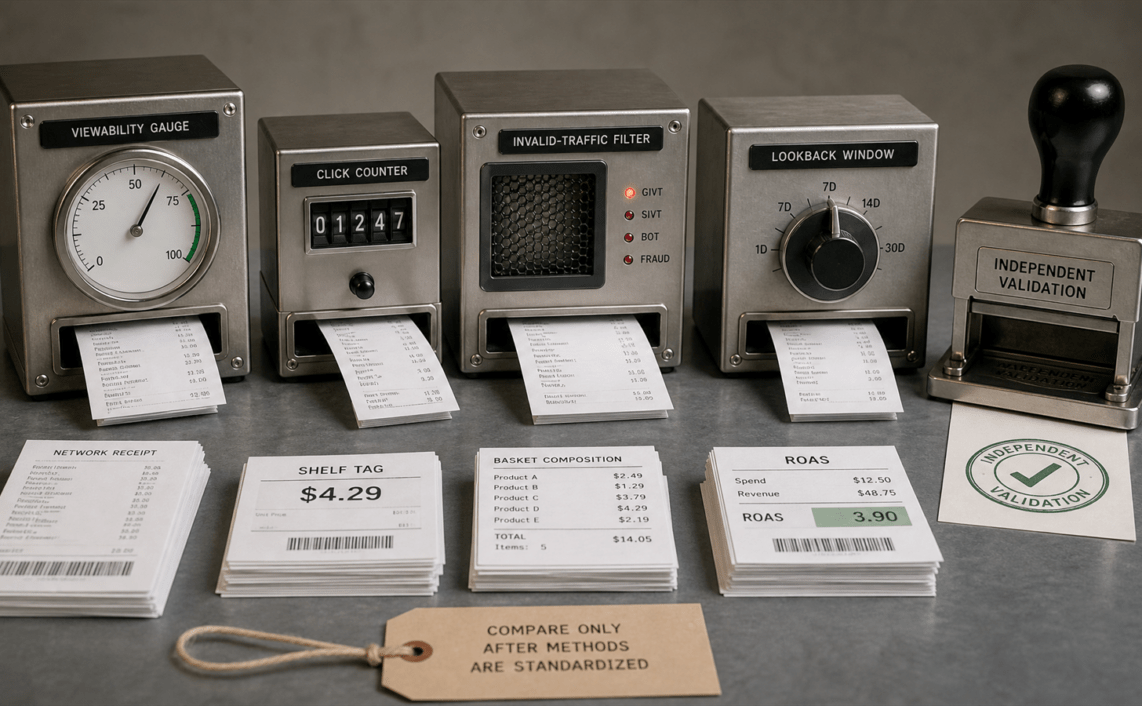
The Amazon case should become a template for every retail-media negotiation. Ask how auctions are priced, whether floor prices or reserves can apply, whether fees are included in CPC, how changes are disclosed and whether historical reporting is restated when methodology changes. If the answer is vague, record that as a governance gap, not just a procurement annoyance.
Also separate media effectiveness from marketplace dependency. Some budgets buy profitable incremental demand. Some defend shelf position. Some subsidize a marketplace relationship. Those can all be rational choices, but they require different KPIs. A defensive shelf budget should not be judged like a prospecting channel, and a prospecting budget should not hide behind marketplace necessity.
The budget decision
Do not respond with a blanket cut unless the account evidence supports it. A better decision model has three lanes. Keep investment where incrementality and margin are defensible. Cap or test budgets where CPC inflation weakens contribution. Escalate commercial questions where auction transparency, invoice detail or reporting methodology are not good enough for the amount being spent.
The lawsuit’s real marketing lesson is that retail media has matured past the stage where platform screenshots can carry the whole business case. If the channel is large enough to influence pricing, profitability and category strategy, it is large enough to deserve audit-grade evidence.